Choose a language

Automatic Google translation. Close the Google bar with × to return to English.

Menu
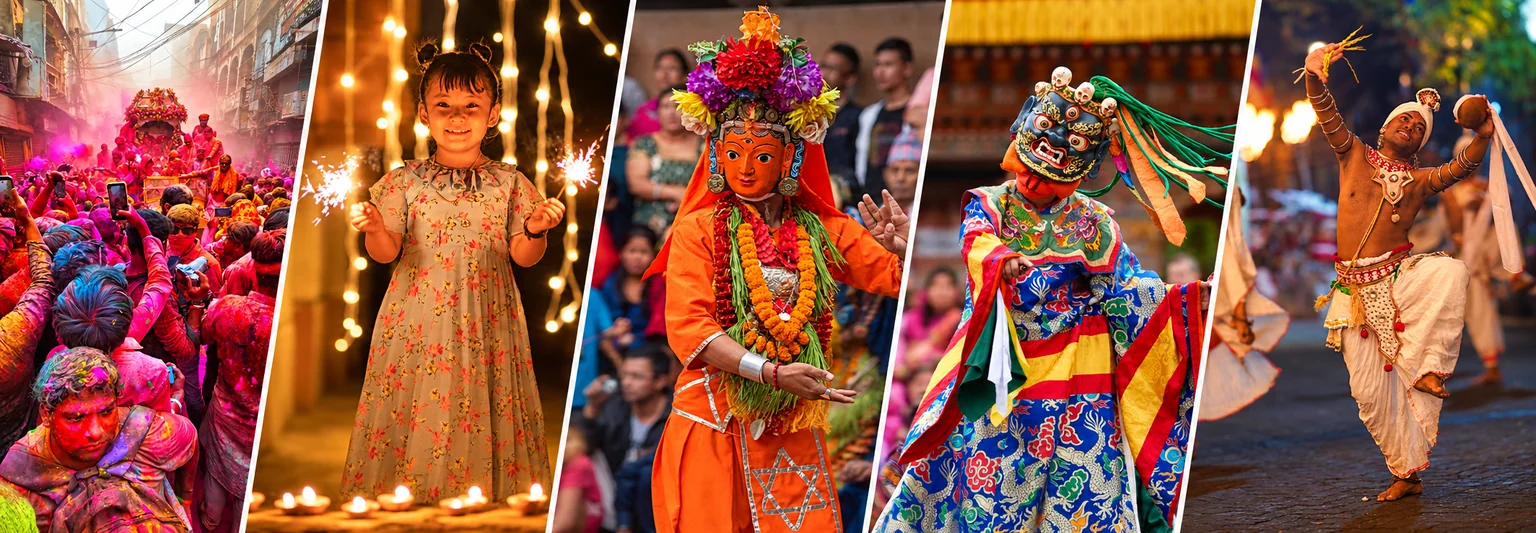
Holi and Diwali in India, and celebrations in Nepal, Bhutan and Sri Lanka

Welcome to the

Festival Calendar

Just the word “festival” is enough to bring a smile and a sense of curiosity. I believe that whenever we explore a country in this wonderful world, we should try, where possible, to experience it during a celebration.

Hotels may cost a little more during these periods, but festivals also offer a chance to discover a country’s character and all its colours. And if you cannot distinguish every colour, or are blind, the music in the streets, the aromas of festive food and the joyful energy of local people can create authentic memories that stay with you forever.

Here, you can browse festivals in India, Nepal, Bhutan and Sri Lanka before planning your trip. Even if your itinerary is already arranged, you can check whether a celebration happens to coincide with your travel dates — you might be in luck!

If you would like to experience a celebration more fully, you are also welcome to join one of our special small-group festival trips. In India, for example, we organise departures every year around Holi and Diwali. We want to help you discover the country, immerse yourself in its traditions and take part in the celebrations.

Happiness guaranteed! Hakuna Matata! Life is beautiful!

January

Duruthu Perahera

Duruthu Perahera

Kelaniya Raja Maha Vihara, near Colombo

Duruthu Perahera is one of Sri Lanka’s major Buddhist festivals, celebrated each January at the historic Kelaniya Raja Maha Vihara temple near Colombo. This sacred celebration commemorates the Buddha’s first visit to Sri Lanka over 2,500 years ago and traditionally marks the beginning of the island’s annual calendar of Buddhist festivals.

The highlight is the magnificent night-time procession, when the area around the Kelaniya temple comes alive with thousands of participants. Whip cracks announce the approaching procession, followed by torchbearers, traditional drummers, dancers, acrobats, fire performers and banner bearers carrying beautiful ceremonial flags. The rhythm of the drums, flickering flames and elaborate costumes turn the illuminated streets into a striking display of Sri Lankan Buddhist culture.

Among the most impressive moments is the passage of the richly adorned elephants. The leading elephant traditionally carries a casket containing a sacred relic beneath an elaborate ceremonial covering with a golden sheen, becoming the spiritual and visual centre of the procession.

For international travellers, witnessing Duruthu Perahera is an exceptional opportunity to discover the visual and spiritual richness of a major traditional Sri Lankan procession. Easy to reach from Colombo, the festival offers a remarkable introduction to the island’s peraheras and a chance to see their dances, costumes, Buddhist rituals and living traditions up close. For a cultural journey through Sri Lanka or a photography tour focused on portraits and scenes of everyday life, Duruthu Perahera also offers wonderful opportunities for photography: dancers’ and musicians’ faces, the movement of the procession, torchlight and the colours of ceremonial costumes.

Lohri

Lohri

Punjab and neighbouring regions of northern India

Lohri is a vibrant folk festival celebrated mainly in Punjab and neighbouring regions, particularly by Punjabi Sikh and Hindu communities. The Sindhi community celebrates a closely related festival called Lal Loi.

Deeply rooted in agricultural traditions, this important harvest festival marks the rabi crop harvest, the end of winter and the return of longer, warmer days. Lohri holds special meaning for families celebrating the first Lohri of a newly married couple or a newborn baby. It therefore symbolises new beginnings, fertility and joy.

Lohri brings communities together through traditional food, folk songs and energetic Punjabi dances such as bhangra and giddha. At nightfall, people gather around a large bonfire, singing and dancing to the beat of the dhol. They offer peanuts, popcorn, sesame seeds, jaggery and rewri to the flames to express gratitude for the harvest and pray for good fortune and prosperity.

Pongal

Pongal

Tamil Nadu

Pongal is the great harvest festival of Tamil Nadu in southern India. This traditional celebration gives thanks to Bhaskar, or Surya, the Sun god, for the energy that sustains crops and makes an abundant harvest possible. It also honours the farm animals that help farmers in their daily work. Pongal thus reflects the deep bond between people, nature and animals, particularly cows and bulls.

The festival marks the beginning of the Tamil month of Thai and a new agricultural season. Families prepare the traditional dish called Pongal by boiling freshly harvested rice with milk and jaggery in a decorated earthenware pot. As the mixture boils over, everyone joyfully calls out “Pongalo Pongal!” This much-loved Tamil ritual symbolises abundance, prosperity and good fortune.

One of the most spectacular attractions during Pongal in Tamil Nadu is Jallikattu, a thrilling traditional Tamil sport generally held during Mattu Pongal, the festival’s third day. Participants attempt to grasp the broad hump of a charging bull and hold on for a set time or distance. Prizes are awarded to those who succeed.

The passion of local communities for Jallikattu is extraordinary. For travellers seeking an authentic cultural experience in Tamil Nadu, watching it can be an emotional and truly unforgettable experience. Despite its dangers, Jallikattu remains a tradition deeply rooted in Tamil identity, pride and cultural heritage.

Sonam Lhosar

Sonam Lhosar

Kathmandu Valley — Tundikhel, Boudhanath and Swayambhunath — and Tamang communities in central Nepal

Sonam Lhosar marks the beginning of the new year for the Tamang community, one of Nepal’s major Himalayan ethnic groups. Families clean and decorate their homes, visit Buddhist monasteries, recite prayers, honour their ancestors and elders, and gather to share traditional food. The festivities are particularly lively in Kathmandu, where Tamang people wear colourful traditional clothing and beautiful jewellery, play the damphu, an emblematic drum, and perform folk songs accompanied by circle dances. Prayer flags, cultural parades and community meals create a warm atmosphere reflecting the community’s Buddhist heritage and strong family ties.

For international travellers, Sonam Lhosar offers a wonderful introduction to Nepal’s rich Himalayan cultures without needing to travel to remote mountain regions. Elaborate Tamang clothing, the rhythm of the drums, energetic group dances and the community’s warm welcome make it a colourful, authentic cultural experience during a winter journey through Nepal.

Jaisalmer Desert Festival

Jaisalmer Desert Festival

Jaisalmer and the Sam Sand Dunes, Rajasthan

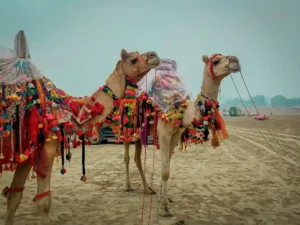
The Jaisalmer Desert Festival, known locally as Maru Mahotsav, is one of the most spectacular annual cultural celebrations in Rajasthan. Set against the golden landscapes of the Thar Desert, it was created to showcase the rich living heritage of Rajasthan’s desert communities. This vibrant three-day festival offers travellers an exceptional opportunity to meet local people, join the festivities and experience the joy of desert life.

Rajasthani folk music, colourful dances, elaborately decorated camels and magnificent regional costumes bring the desert culture of Jaisalmer to life. Among the most distinctive attractions are the Mr Desert and Miss Moomal contests, where participants proudly display their traditional Rajasthani dress, jewellery, personality and knowledge of local heritage. For international travellers, these lively, photogenic contests offer a spectacle rarely encountered in Europe.

The festival also features an entertaining range of competitions and activities. Visitors can watch camel races, turban-tying contests and matka races involving traditional water pots, as well as the famous contest for the longest and most impressive moustache. One of the most enjoyable events is a friendly tug of war between local people and international visitors, giving travellers a chance to take part in the celebrations.

Depending on the year’s programme, festivities may also extend into the dunes around Jaisalmer, where camel activities, folk music and traditional dances unfold beneath the vast desert sky. The colours of Rajasthani dress, the rhythms of desert musicians, the humour of the competitions and the warm participation of local communities create an atmosphere of sheer joy. For travellers from Europe, Maru Mahotsav can feel like entering another world of camels, swirling fabrics, towering turbans and proudly worn moustaches.

Experiencing the Jaisalmer Desert Festival is one of the most joyful and memorable ways to discover the culture of Rajasthan and the Thar Desert. Jaisalmer attracts many visitors during the festival, so hotels, boutique stays and desert camps can fill up quickly. It is wise to book accommodation or a Rajasthan tour well in advance.

Navam Maha Perahera

Navam Maha Perahera

Gangaramaya Temple and Beira Lake, Colombo

Navam Maha Perahera is one of Sri Lanka’s grandest and most colourful Buddhist festivals, celebrated each year around the Navam full moon in February. Organised by Colombo’s famous Gangaramaya Temple since 1979, the festival transforms the streets around Beira Lake and Navam Mawatha into a spectacular illuminated procession that brings together religious devotion, culture and tradition.

The festival commemorates important events in Buddhist history, including the appointment of Sariputta and Moggallana as the Buddha’s two chief disciples, as well as a major gathering of the Buddhist Sangha. These religious foundations give the celebration deep spiritual meaning alongside its extraordinary visual splendour.

During the magnificent night-time perahera, traditional drummers, dancers, whip bearers, fire performers, flag bearers and richly adorned elephants parade through the heart of Colombo. One of the most impressive moments is the appearance of the temple’s leading elephant, carrying a casket containing the sacred relic and wearing an elaborate ceremonial covering illuminated by hundreds of small lights. A procession of Buddhist monks in saffron robes is another memorable sight, bringing a solemn spiritual presence amid the rhythms, movement and vivid colours of the festivities.

For international travellers, witnessing Navam Maha Perahera is an exceptional opportunity to discover one of the most spectacular expressions of Sri Lanka’s Buddhist heritage while staying in Colombo. Illuminated processions, traditional dances, drumming, religious rituals, saffron-robed monks and ceremonial splendour make it a particularly fascinating experience during a cultural journey through Sri Lanka. For photography enthusiasts and travellers interested in portrait photography tours, reflections on Beira Lake, illuminated costumes, the performers’ expressive faces and the night-time atmosphere offer remarkable opportunities to capture the colours, people and living traditions of Sri Lanka.

February

Goa Carnival

Goa Carnival

Goa

Goa Carnival is one of India’s most colourful and lively festivals. Celebrated every year just before Lent, it has roots in Goa’s Portuguese heritage, now closely blended with local traditions. During the festivities, the streets become a vast spectacle of music, dance and creativity. Led by the legendary King Momo, magnificent parades bring together decorated floats, costumed performers, musicians and dancers before enthusiastic crowds. Panjim hosts the best-known parade, while Margao, Vasco da Gama and Mapusa also hold joyful celebrations. Street performances, concerts, traditional Goan food and the festive atmosphere let travellers discover Goa beyond its beaches, through its fascinating blend of Indian and Portuguese cultures.

Maha Shivaratri

Maha Shivaratri

Across India

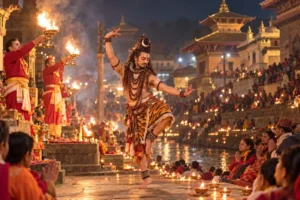
Maha Shivaratri, meaning “the great sacred night of Shiva”, is one of the most important Hindu festivals dedicated to Lord Shiva. In many Hindu traditions, it commemorates the divine marriage of Lord Shiva and Goddess Parvati. Across India, devotees fast, visit temples and stay awake throughout the night to pray and honour Shiva.

During Maha Shivaratri celebrations in India, Shiva temples are beautifully decorated, and Hindu communities organise grand processions featuring jhankis. These decorated tableaux depict sacred stories, divine manifestations and important moments associated with Shiva and Shakti. The streets come alive to the rhythm of music, dancing and joyful chants of “Har Har Mahadev!”

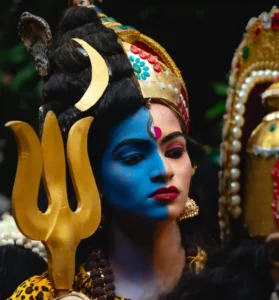
Maha Shivaratri is particularly spectacular in Varanasi and the great temple cities of Tamil Nadu, where some processions resemble spiritual carnivals bursting with colour. Participants portray different manifestations of Shiva and Shakti, while the relentless beat of the drums creates an atmosphere of extraordinary power that can give visitors goosebumps and leave memories that never fade.

Maha Shivaratri in Nepal

Maha Shivaratri in Nepal

Pashupatinath Temple and the surrounding ghats, Kathmandu, Nepal

Maha Shivaratri is Nepal’s most important festival dedicated to Lord Shiva. Each year, thousands of devotees and sadhus from Nepal and India gather at Pashupatinath Temple in Kathmandu, one of the world’s most sacred Hindu pilgrimage sites. Pilgrims wait in long lines to offer prayers, milk, flowers and bel leaves, while saffron-clad ascetics gather around sacred fires. After nightfall, the sound of bells and devotional songs fills the air, while countless lamps and ritual fires create a powerful spiritual atmosphere beside the Bagmati River.

For international travellers, Maha Shivaratri offers an extraordinary opportunity to experience the devotion of Nepal’s living Hindu traditions. Although entry to the main Pashupatinath temple complex is restricted to Hindus, non-Hindu visitors can observe the festival from permitted viewpoints, including the terraces across the Bagmati River. The colourful sadhus, sacred fires, riverside rituals and immense gathering of pilgrims make it one of the most fascinating religious festivals to experience during a journey through Nepal.

Mahashivratri in Sri Lanka

Mahashivratri in Sri Lanka

Koneswaram Temple, Trincomalee; also Jaffna, Mannar, Chilaw and Colombo

Maha Shivaratri, meaning “the Great Night of Shiva”, is one of the most important Hindu festivals celebrated in Sri Lanka and a national public holiday. It is observed especially by the island’s Tamil Hindu community. Celebrated each year between February and March, this deeply spiritual festival honours Shiva, one of Hinduism’s principal deities, who is associated with transformation, dissolution and renewal.

Different Hindu traditions connect Maha Shivaratri with sacred events and stories about Shiva, including his cosmic dance, the Tandava. At the heart of the celebration, however, is an entire night devoted to prayer, meditation and spiritual reflection. Many devotees fast and remain awake throughout the night, reciting prayers and bhajans, lighting oil lamps and making ritual offerings. Shiva lingams are ceremonially bathed with water, milk and honey as an act of reverence.

In Sri Lanka, Maha Shivaratri holds particular significance at historic temples dedicated to Shiva, especially the sacred sites traditionally known as the Pancha Ishwarams. Located in different parts of the island, these ancient Shaivite pilgrimage sites form an important part of Sri Lanka’s Hindu religious heritage. They welcome many devotees for Maha Shivaratri prayers and special ceremonies.

For international travellers, experiencing Maha Shivaratri offers a remarkable opportunity to discover the spiritual traditions of Sri Lanka’s Tamil Hindu community during an extraordinary night of devotion. At some temples and cultural celebrations, devotional music and traditional performances continue late into the night. Travellers may also see Bharatanatyam dance performances inspired by stories and symbolism associated with Shiva, accompanied by the distinctive sound of nadaswaram wind instruments and the powerful rhythms of mridangam drums.

Visitors may also witness sacred fire rituals called homa. During these ceremonies, priests recite Sanskrit mantras while placing offerings such as grains, herbs and ghee into a consecrated fire. Together with the scent of incense, the flickering oil lamps, temple bells, devotional songs and prayers continuing through the night, these ceremonies create a deeply moving religious atmosphere.

For travellers drawn to a cultural or spiritual journey in Sri Lanka, Maha Shivaratri offers an exceptional opportunity to explore the island’s Hindu heritage beyond conventional sightseeing. More than a festival to observe, this night of prayer, music, rituals and devotion offers a deeper understanding of the religious and cultural diversity that is an essential part of Sri Lanka’s living heritage.

Punakha Drubchen and Punakha Tshechu

Punakha Drubchen and Punakha Tshechu

Punakha Dzong and its courtyards, Punakha

Punakha Drubchen and Punakha Tshechu are two emblematic Bhutanese festivals held one after the other in Punakha, the kingdom’s former capital. Each year, the majestic courtyards of Punakha Dzong become the setting for spectacular ceremonies that bring together history, Buddhist traditions and public devotion. For travellers planning a cultural tour of Bhutan, these festivities offer an exceptional encounter with the country’s heritage and living traditions.

Punakha Drubchen commemorates Bhutan’s victory over Tibetan forces in the seventeenth century. Local men dressed as the historic pazap warriors vividly reenact episodes from the campaign associated with Zhabdrung Ngawang Namgyel. The courtyards of the imposing fortress and the nearby riverbanks become an open-air stage for history. Punakha Tshechu follows with sacred Cham dances performed by masked dancers, traditional music, Buddhist blessings and Bhutanese families attending the ceremonies in their finest traditional dress.

Experiencing Punakha Drubchen and Punakha Tshechu reveals Bhutanese culture in one of the kingdom’s most impressive settings. The vast seventeenth-century dzong stands at the meeting point of the Pho Chhu and Mo Chhu rivers, contrasting beautifully with the masked dancers’ colourful silks and the pazap warriors’ traditional armour. This unique atmosphere also offers remarkable opportunities for cultural photography and portraits. For travellers interested in history, Buddhist traditions, Bhutanese festivals and photography tours, these celebrations can become one of the most memorable moments of a journey through Bhutan.

March

Holi in Nepal – Fagu Purnima

Holi in Nepal – Fagu Purnima

Across Nepal, particularly Kathmandu, Pokhara and the Terai

Holi, known as Fagu Purnima in Nepal, is one of the most joyful Hindu festivals celebrated in both Nepal and India. Sharing the same religious roots, it marks the arrival of spring and the victory of good over evil. It recalls the stories of Holika and Prahlada, as well as the playful use of colour associated with Lord Krishna. As in India, friends, families and visitors cover one another in brightly coloured powders while music, dancing and laughter fill the streets. Nepal also has its own traditions: in Kathmandu, the festivities begin with the ceremonial raising of the chir, a tall decorated bamboo pole that is later burned to mark the festival’s end. The Kathmandu Valley and hill regions celebrate Holi one day before the Terai in southern Nepal, where festivities coincide with those across the border in India.

For international travellers, Holi is one of the most joyful and accessible ways to take part in Nepal’s living traditions. Clouds of coloured powder, energetic street dancing and a friendly festive atmosphere create unforgettable moments, particularly around Kathmandu Durbar Square and in Thamel. Travellers are advised to wear clothes they do not mind staining, protect their cameras and phones, and always ask permission before applying colour to someone else.

Holi

Holi

Across India

The Festival of Colours welcomes spring with an explosion of joy, music and tradition. More than a spectacle, Holi offers an authentic immersion in local life, where residents and travellers share colour, laughter and emotion.

Celebrations are especially lively in Rajasthan, Uttar Pradesh, Madhya Pradesh, Maharashtra, Gujarat, Punjab and West Bengal. Taking part in Holi is a chance to experience India in a different way and return home with truly unforgettable memories.

Shigmo Goa

Shigmo Goa

Goa

Shigmo is one of Goa’s most vibrant traditional festivals, celebrating the arrival of spring and the state’s rich Hindu heritage. Unlike the cosmopolitan Goa Carnival, Shigmo offers travellers a fascinating glimpse into the region’s ancient customs and authentic village life. The festivities begin in local communities with temple rituals, lively processions, traditional songs, drums and folk dances. Major towns later host spectacular street parades featuring beautifully decorated floats inspired by Hindu mythology and Goan history. Performers dressed in colourful costumes present traditional dances such as Ghode Modni, Fugdi and Goff, while the streets come alive with music and bright clouds of coloured powder. Celebrated around the time of Holi, the Shigmo Festival is a wonderful opportunity to experience Goa beyond its famous beaches and discover its living traditions, artistic heritage and joyful cultural spirit.

Chapchar Kut

Chapchar Kut

Aizawl and throughout Mizoram

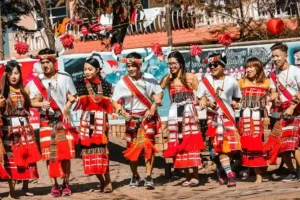
Chapchar Kut is one of Mizoram’s most important and most colourful spring festivals. Deeply connected to the traditional farming life of the Mizo people, it is celebrated after the demanding work of clearing land for shifting cultivation, known as jhum, is complete. The cut bamboo and vegetation are left to dry before the next stages of burning and sowing. This pause in the farming cycle becomes a time to gather and celebrate with joy.

During Chapchar Kut, people come together in vibrant traditional Mizo clothing to dance, sing and celebrate their shared cultural heritage. A major highlight is the famous Cheraw bamboo dance, in which dancers move gracefully between long bamboo poles as other participants bring them together and apart in rhythm. Traditional dances, musical performances, local food, crafts and handwoven textiles add to the lively festival atmosphere.

For international travellers, Chapchar Kut offers a wonderful introduction to Mizo culture and Mizoram’s hospitality. The colourful traditional clothing, synchronised movements of the bamboo dance, uplifting music and warm community spirit make it one of the most engaging festivals to experience in Northeast India.

Gangaur

Gangaur

Udaipur and across Rajasthan

Gangaur is one of Rajasthan’s most deeply rooted and colourful traditional celebrations. Dedicated to the goddess Gauri, a form of Parvati, and her union with Lord Shiva, it symbolises love, harmony in marriage, prosperity and the arrival of spring. Married women pray for the health and happiness of their husbands, while unmarried young women traditionally ask Gauri to bless them with a loving partner.

Gangaur is celebrated across Rajasthan, but Udaipur offers one of the most beautiful and fascinating ways to experience it. In the City of Lakes, Gangaur coincides with the three-day Mewar Festival. The historic city becomes a magnificent celebration of religious devotion, royal heritage and Rajasthani culture.

Markets and streets are decorated as women put on their finest traditional clothing and jewellery. Sacred figures of Isar and Gangaur, traditionally made from clay or wood, are carefully adorned. Women carry smaller figures on their heads through the old city’s lanes, while larger wooden figures also join the ceremonial processions accompanied by folk songs, music and dancing.

The procession reaches the famous Gangaur Ghat on the shores of Lake Pichola, where the festivities take on an almost magical quality. The decorated figures are placed on ceremonial boats for an enchanting boat procession across the lake. Surrounded by illuminated palaces, historic havelis, old ghats and the Aravalli Hills, the scene looks like a royal Rajasthani painting brought to life. Cultural performances, traditional dances, music and fireworks add to the festive atmosphere.

For international travellers, experiencing Gangaur and the Mewar Festival in Udaipur is more than a spectacle. It is a special opportunity to discover the living traditions of Rajasthan and see how devotion, family customs, royal history and community life remain closely connected. Few festivals reveal Udaipur’s romantic beauty and cultural heritage so vividly, making Gangaur an exceptional time to visit the City of Lakes.

Paro Tshechu

Paro Tshechu

Rinpung Dzong and the festival ground below it, Paro

Paro Tshechu is one of Bhutan’s grandest, most revered and most popular religious festivals. Held each spring at Rinpung Dzong in Paro and the festival ground below this impressive seventeenth-century fortress, the five-day celebration honours Guru Rinpoche (Padmasambhava), the revered Buddhist master who introduced Tantric Buddhism to the Himalayan kingdom in the eighth century. Today, Paro Tshechu remains one of Bhutan’s most important cultural and religious celebrations, bringing together local communities and travellers from around the world.

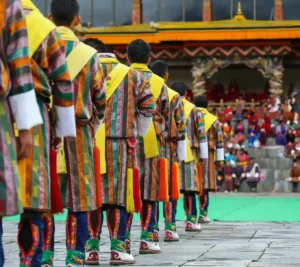
During the festivities, monks and lay dancers perform sacred Cham dances, wearing elaborate masks that portray Buddhist teachings, protective deities and the triumph of wisdom over harmful forces. Bhutanese families arrive in beautiful kira and gho, turning the festival grounds into an extraordinary display of traditional textiles, jewellery and community life. Among the most fascinating characters are the Atsaras, traditional masked clowns who entertain the crowd with humour while playing a special role in the sacred performances.

For international travellers, witnessing Paro Tshechu offers an exceptional immersion in Bhutanese Buddhist culture and living traditions. Expressive masks, brightly coloured silk costumes, Atsaras, monks, families in traditional dress and the spectacular architecture of Rinpung Dzong create a remarkable setting for cultural photography and portraits. For travellers interested in Buddhist traditions, cultural journeys and photography tours in Bhutan, Paro Tshechu can be one of the highlights of a journey through the kingdom.

April

Rhododendron Festival

Rhododendron Festival

Royal Botanical Park, Lamperi, on the road between Thimphu and Punakha

Bhutan’s Rhododendron Festival is a unique three-day celebration of nature, biodiversity and responsible tourism, held during the spectacular spring bloom of the rhododendrons. Unlike the kingdom’s religious tshechus, this colourful festival celebrates environmental conservation, Bhutan’s extraordinary Himalayan flora and ecotourism closely connected with local communities.

The best-known celebration takes place in the beautiful Royal Botanical Park in Lamperi, near the scenic Dochula Pass between Thimphu and Punakha. Another edition is also held amid the remote, high-altitude landscapes of Merak in eastern Bhutan, offering a very different view of the kingdom’s unspoilt natural environment. In spring, forests and mountain slopes fill with shades of red, pink and white. Exhibitions and educational activities introduce visitors to Bhutan’s rhododendron species and the efforts to protect this remarkable biodiversity. Cultural dances and performances, traditional games, regional food and local crafts connect the botanical setting with the everyday traditions of nearby communities.

For travellers and nature lovers, the festival offers guided botanical walks through rhododendron forests and the chance to discover some of the 29 species recorded in the Royal Botanical Park. Traditional performances, including the striking Tiger and Bear dances, along with archery demonstrations—archery is Bhutan’s national sport—and other traditional games bring a lively cultural dimension to the event.

For travellers interested in nature journeys, responsible tourism and botanical photography, the Rhododendron Festival is a wonderful opportunity to explore Himalayan biodiversity while meeting the communities who live in these landscapes. It is an ideal way to discover a greener, wilder and lesser-known side of Bhutan, beyond its monasteries and famous religious festivals.

Sinhala and Tamil New Year

Sinhala and Tamil New Year

Throughout Sri Lanka; especially rewarding to experience in villages and small towns

Sinhala and Tamil New Year, known locally as Aluth Avurudda in Sinhala and Puthandu in Tamil, is one of Sri Lanka’s most important national and cultural celebrations. Celebrated in April by Sinhala and Tamil communities, it marks the traditional New Year. It is closely linked to the astrological passage of the Sun from Pisces into Aries and the end of the main harvest season.

Preparations begin with families cleaning and decorating their homes, making traditional sweets and getting ready to welcome the new year. One of the most fascinating aspects of the celebration is the importance of auspicious times determined by astrology. Lighting the hearth, preparing the first meal, eating together, returning to work and exchanging gifts may all take place at carefully chosen times. Village games, traditional drumming, music, family gatherings and shared meals make this one of the warmest expressions of family and community life in Sri Lanka.

For international travellers, Sinhala and Tamil New Year is more than a celebration to watch: visitors may sometimes take part. Traditional New Year games bring villages and communities together for playful challenges, such as climbing an approximately nine-metre greased pole, breaking a clay pot while blindfolded in Kana Mutti Bindeema, or taking part in lively pillow fights while balancing on raised logs. These good-humoured competitions create some of the most joyful and memorable moments of the festivities.

Food is also an essential part of the experience. Travellers can discover specialities prepared for the occasion, including delicately shaped, crispy kokis, delicious konda kavum and aasmi, along with many other homemade sweets shared among families, neighbours and guests. For those planning a cultural journey or a family holiday in Sri Lanka, experiencing Sinhala and Tamil New Year is a remarkable opportunity to discover local traditions, food and community celebrations while exploring a side of the country that reaches far beyond its famous monuments and beaches.

Baisakhi

Baisakhi

Punjab — mainly Amritsar and Anandpur Sahib

Baisakhi, also known as Vaisakhi, is one of Punjab’s most important festivals and a vibrant celebration of the spring harvest. Farmers give thanks for abundant crops, while communities come together for traditional music, colourful clothes, festive food and joyful celebrations.

Baisakhi also holds deep religious significance for Sikhs. It commemorates the historic day in 1699 when the tenth Sikh Guru, Guru Gobind Singh Ji, founded the Khalsa Panth at Anandpur Sahib, marking a defining chapter in Sikh history.

One of Baisakhi’s most impressive spectacles is Nagar Kirtan, a grand religious procession with devotional singing, decorated floats, drummers and remarkable Gatka demonstrations of the traditional Sikh martial art. Cultural festivities also feature energetic bhangra dancing and graceful giddha performances. Gurdwaras welcome devotees and visitors for prayers and community langars, where volunteers serve free vegetarian meals to everyone, regardless of religion, caste or background. This tradition beautifully expresses Sikh principles of equality, generosity and selfless service.

Rongali Bihu

Rongali Bihu

Throughout Assam, particularly in Guwahati

Rongali Bihu, also known as Bohag Bihu, is Assam’s most vibrant festival and one of Northeast India’s most joyful celebrations. It marks the Assamese New Year, the arrival of spring and the beginning of a new farming cycle. Although Assam celebrates three Bihu festivals during the year, Rongali Bihu is the most important and colourful.

The festivities traditionally continue for several days. During Goru Bihu, cattle are washed and honoured in recognition of their essential role in rural life. Manuh Bihu follows, when people wear new clothes, exchange greetings and seek blessings from their elders. Communities celebrate with energetic Bihu dances, folk songs and the distinctive sounds of the dhol drum, pepa horn and gogona. Assamese specialities such as pitha and laru are also prepared and shared.

For international travellers, experiencing Rongali Bihu offers an exceptional opportunity to discover the warmth and vitality of Assamese culture. Colourful traditional clothing, lively dances, community celebrations and the festive atmosphere in Assam’s towns and villages make it one of the most memorable festivals to experience during a journey through Northeast India.

Bisket Jatra

Bisket Jatra

Bhaktapur, especially Taumadhi Square, Khalla Tole and the old-city procession route

Bisket Jatra is one of Nepal’s most impressive and spectacular festivals. Celebrated in the ancient city of Bhaktapur for the Nepali New Year, it features enormous wooden chariots carrying the deities Bhairab and Bhadrakali. Rival groups of devotees pull them through the narrow brick streets, bringing together religious devotion, neighbourhood rivalry and incredible collective energy. Another important ritual is the raising and later lowering of a towering ceremonial wooden pole called the lingo, symbolising victory over two legendary serpents.

For international travellers, Bisket Jatra offers an extraordinary opportunity to discover living Newar culture against Bhaktapur’s beautiful medieval backdrop. It can be an unforgettable part of a cultural journey through Nepal. The monumental chariots, ancient temples, expressive faces, enthusiastic crowds and dramatic tug-of-war contests also create exceptional scenes for cultural photography and a portrait photography tour. Because the chariots can move suddenly and the ropes are under great tension, visitors should keep a safe distance and follow local instructions carefully.

Rato Machhindranath Jatra and Bhoto Jatra

Rato Machhindranath Jatra and Bhoto Jatra

Bungamati, Patan and Jawalakhel in the Kathmandu Valley

Rato Machhindranath Jatra is Nepal’s longest chariot festival, a remarkable celebration lasting several weeks in the ancient city of Lalitpur (Patan). Dedicated to the God of Rain and Compassion, it brings Hindus and Buddhists together to pray for a good harvest and protection from drought. For travellers, it offers an authentic experience at the heart of Newar culture. The festival ends with Bhoto Jatra, its grand finale, when a sacred, jewel-studded black vest—the bhoto—is displayed to the public.

The procession begins at Pulchowk, where local people build a towering chariot from wood, cane and bamboo, mounted on large wooden wheels. An image of Rato Machhindranath is placed inside. Over the following weeks, hundreds of devotees slowly pull the heavy structure with thick ropes through Patan’s narrow, historic streets, accompanied by traditional Newar music, dances and community feasts. After the chariot reaches Jawalakhel, the bhoto is traditionally displayed four days later in the presence of Nepal’s head of state. It is raised from the chariot for the gathered crowd to see, bringing the festival to a memorable close.

For international travellers seeking cultural tours and authentic experiences, the festival offers a remarkable encounter with Newar culture and wonderful opportunities for cultural photography. The chariot route becomes a lively street carnival, with musicians, local dances and the chance to taste Newar specialities such as samay baji and choila during community feasts.

Thrissur Pooram

Thrissur Pooram

Thekkinkadu Maidan, Vadakkunnathan Temple, Thrissur, Kerala

Thrissur Pooram is Kerala’s grandest temple festival and is often called “the Mother of all Poorams”. Held at Thekkinkadu Maidan around the historic Vadakkunnathan Temple in the heart of Thrissur, the celebration was established over two centuries ago by Shakthan Thampuran, the Maharaja of Cochin, to bring together the surrounding temples and communities.

The main festivities unfold over approximately 36 hours. Magnificently decorated elephants take part in ceremonial processions accompanied by the powerful rhythms of Kerala’s traditional percussion ensembles. One of the most anticipated moments is Kudamattam, when the Paramekkavu and Thiruvambady groups rapidly exchange rows of brilliantly coloured, ornate parasols above the elephants. The festival is also famous for the impressive Ilanjithara Melam percussion performance and, traditionally, its grand night-time fireworks display.

For international travellers, experiencing Thrissur Pooram offers an extraordinary immersion in the living temple culture of southern India. The vast gathering, dazzling parasols, drumming, ceremonial processions and intense atmosphere of devotion make it one of India’s most spectacular and unforgettable cultural festivals.

Ura Yakchoe

Ura Yakchoe

Ura Lhakhang and Ura village, Bumthang

Ura Yakchoe is a deeply spiritual village festival held over five days each year at Ura Lhakhang in the beautiful Ura Valley of Bumthang, central Bhutan. Unlike the large religious celebrations held at the main dzongs of Paro or Thimphu, Ura Yakchoe is a smaller community celebration, deeply rooted in local life and organised by the villagers. Dedicated to Guru Rinpoche and associated with a sacred relic of Chana Dorji (Vajrapani), the festival offers a remarkable introduction to Buddhist faith and the living traditions of rural Bhutan.

During the celebrations, monks and local people perform sacred Cham dances wearing striking masks, alongside traditional folk dances. Villagers gather around the temple wearing their finest traditional clothes. One of the festival’s most important moments is the procession and presentation of the sacred relic associated with Chana Dorji, displayed so devotees may receive its blessings. Surrounded by traditional houses, farmland and the Ura Valley’s spectacular mountain scenery, the event retains a deep spiritual and community spirit.

For international travellers, Ura Yakchoe is a chance to discover one of Bhutan’s lesser-known festivals, away from the bustle of the kingdom’s larger celebrations. The procession of the sacred relic, mysterious masked dances and village traditions also offer wonderful opportunities for cultural photography and portraits. Visitors may experience local hospitality and traditional drinks such as sinchang and ara, made from grains including rice, wheat or millet.

For travellers interested in cultural tours, Buddhist traditions, photography and authentic experiences, Ura Yakchoe offers a rare glimpse into the daily life of Bumthang’s communities. It is a wonderful opportunity to discover a warm, deeply human side of rural Bhutan, where spiritual traditions and village life continue to be passed down from one generation to the next.

May

Buddha Jayanti

Buddha Jayanti

Lumbini; Swayambhunath and Boudhanath in Kathmandu; Buddhist monasteries throughout Nepal

Buddha Jayanti is one of Nepal’s most important spiritual celebrations. It commemorates three defining moments in the life of Gautama Buddha: his birth, enlightenment and final passing (Parinirvana). For many pilgrims and travellers, it is a special time for a cultural journey into Buddhist traditions.

Nepal is also the birthplace of the Buddha: according to Buddhist tradition, he was born in Lumbini around 623 BC. On Buddha Jayanti, monks, nuns and pilgrims gather at the Mayadevi Temple. Butter lamps, prayers and ceremonies bring the sacred area to life, while the Ashoka Pillar recalls Lumbini’s historic importance.

In the Kathmandu Valley, two essential places to visit are the stupas of Boudhanath and Swayambhunath, also known as the Monkey Temple. Colourful prayer flags, gatherings of devotees and the atmosphere around the stupas make this a memorable time to visit.

Some monasteries may offer opportunities to see Buddhist relics, thangkas (painted scrolls) and statues, depending on what is open to visitors during the celebrations.

Travellers can also experience living traditions by joining the kora—a clockwise walk around Boudhanath Stupa—alongside devotees reciting prayers.

If you are drawn to portrait photography, the festival offers memorable scenes. Incense fills the air, golden butter lamps glow at sunset, and the contrast between monks’ maroon robes and the white stupas creates a striking setting for your photographs.

Vesak Festival

Vesak Festival

Colombo, Kandy, Anuradhapura and communities throughout Sri Lanka

Vesak is Sri Lanka’s most sacred Buddhist celebration and one of its most culturally important festivals. Observed each year on the full moon of the lunar month of Vesak, it commemorates three defining moments in the life of Gautama Buddha: his birth, his enlightenment (the attainment of Buddhahood) and his passing into final liberation, known as Parinirvana.

During Vesak, towns and villages across Sri Lanka are transformed by light and religious devotion. Homes, streets and public spaces glow with colourful handmade Vesak lanterns. Enormous illuminated displays called thoranas tell stories and share Buddhist teachings through carefully painted panels and spectacular light displays. In the temples, devotees dressed mainly in white create a peaceful atmosphere alongside the vivid colours of the outdoor celebrations.

One of Vesak’s most moving traditions is the dansal. Set up by families, communities, businesses and associations, these temporary stalls offer free food and drinks to everyone who passes by, in a spirit of generosity inspired by the Buddhist practice of giving. From simple refreshments to full meals, this tradition creates a remarkable atmosphere of sharing and hospitality throughout the country.

For international travellers, experiencing Vesak in Sri Lanka is an unforgettable sensory experience at the heart of the island’s living Buddhist heritage. The enormous illuminated thoranas, thousands of colourful lanterns and welcoming dansal turn an ordinary evening into an extraordinary cultural experience. In Colombo, the famous Gangaramaya Temple and its surroundings become one of the main centres of the celebrations. Elaborate lantern displays, delicate paper creations and Buddhist devotional songs known as Bhakti Gee fill the illuminated nights with music.

For travellers planning a cultural journey through Sri Lanka, Vesak offers an exceptional opportunity to discover Buddhist spirituality both inside the temples and in the heart of everyday life. The festival is also particularly rewarding for travel photography: glowing lanterns, illuminated streets, devotees dressed in white and community celebrations create extraordinary scenes across the island. Beyond its visual splendour, Vesak helps visitors understand how deeply faith, generosity and community spirit remain rooted in Sri Lanka’s living culture.

June

Nimalung Tshechu

Nimalung Tshechu

Nimalung Dratshang in the Chumey Valley, Bumthang

Nimalung Tshechu is a sacred three-day Buddhist festival held each year at the historic Nimalung monastery in the peaceful Chumey Valley in Bumthang, central Bhutan. Unlike the major religious festivals of Paro and Thimphu, which are mainly held in spring or autumn, Nimalung Tshechu takes place in summer. It is associated with the birth anniversary of Guru Rinpoche (Padmasambhava), the great eighth-century Buddhist master who introduced Tantric Buddhism to Bhutan.

For several weeks, the monks of Nimalung prepare for the spectacular sacred Cham dances. Elaborate masks, colourful costumes, ritual music and Buddhist symbolism bring to life performances deeply rooted in the kingdom’s spiritual traditions. Among the most striking is Durdag, or the Dance of the Lords of the Cremation Grounds, recognisable by its astonishing skeleton costumes. Monks, local people and pilgrims gather around a religious tradition that remains very much alive in the heart of Bhutan.

For international travellers, Nimalung Tshechu’s most spectacular moment comes at dawn, when a sacred giant Thongdrol depicting Guru Rinpoche is unfurled. Measuring approximately nine metres high and twelve metres wide, this monumental religious artwork is displayed along the monastery wall for only a few hours. It is then carefully folded away to protect it from prolonged exposure to the sun. According to Bhutanese Buddhist tradition, simply viewing a sacred Thongdrol brings blessings and helps purify negative karma.

Surrounded by Bumthang’s rural landscapes and traditional villages, Nimalung Tshechu offers remarkable opportunities for cultural photography and portraits, particularly during the dawn Thongdrol ceremony and the impressive masked dances. For travellers interested in cultural tours, Buddhist traditions and photography journeys through Bhutan, Nimalung Tshechu is a chance to experience one of the kingdom’s most moving and photogenic spiritual celebrations.

Hemis Festival

Hemis Festival

Hemis Monastery, near Leh, Ladakh

The Hemis Festival is one of Ladakh’s most important and spectacular Buddhist celebrations. Held at Hemis Monastery, about 45 kilometres from Leh and around 3,650 metres above sea level, it is surrounded by the majestic landscapes of the Himalayas. The festival celebrates the birth anniversary of Guru Padmasambhava, also known as Guru Rinpoche, who played a fundamental role in spreading Tibetan Buddhism across the Himalayan region.

Over two days, the monastery courtyard comes alive with sacred Cham dances performed by Buddhist monks wearing striking masks and magnificent traditional costumes. Accompanied by the powerful sound of drums, cymbals and long Tibetan horns, these ritual dances symbolise the triumph of wisdom and good over ignorance and evil. Religious ceremonies, prayers and blessings draw Ladakhi families, pilgrims and travellers from around the world.
For international visitors, experiencing the Hemis Festival offers a rare opportunity to discover Ladakh’s living Buddhist heritage at one of its best-known monasteries. The spiritual atmosphere, fascinating masked dances, colourful costumes and dramatic mountain setting make it one of the most remarkable cultural festivals to experience during a journey through India.

Poson

Poson

Mihintale and Anuradhapura; Buddhist temples across Sri Lanka

Poson, also known as Poson Poya, is one of Sri Lanka’s most sacred Buddhist celebrations. Observed across the island, it commemorates the introduction of Buddhism to Sri Lanka in the third century BC. It recalls the historic meeting at Mihintale between Arahat Mahinda, son of the Indian emperor Ashoka, and King Devanampiyatissa. This event is traditionally regarded as the beginning of Buddhism’s establishment on the island.

During Poson, Mihintale becomes the spiritual heart of the celebrations. Large numbers of pilgrims, dressed simply in white, gather at this sacred site to visit its ancient monasteries, stupas and places associated with the arrival of Buddhism. Many then continue their pilgrimage to nearby Anuradhapura, one of Sri Lanka’s great historic capitals and an important centre of Buddhist heritage. Lanterns and illuminations light up the sacred cities, while dansal offer free food and refreshments to pilgrims and visitors in a spirit of generosity.

For international travellers, experiencing Poson at Mihintale is a remarkable opportunity to join local devotees for one of Sri Lanka’s great Buddhist pilgrimages. One of the most memorable experiences is following the stream of white-clad pilgrims up the famous staircase of around 1,840 steps towards Mihintale’s sacred hill and religious monuments. Reaching the hilltop shrines amid pilgrims, prayers and religious devotion reveals a side of Sri Lanka profoundly different from its beaches and best-known tourist sites.

For travellers drawn to a cultural or spiritual journey through Sri Lanka, combining Poson at Mihintale with a visit to Anuradhapura offers an exceptional encounter with the island’s living Buddhist heritage. Ancient stupas, sacred sites, illuminated streets and generations of pilgrims gathered in devotion reveal far more than a historic event: a living tradition that has helped shape Sri Lankan culture for over two thousand years.

July

Kataragama Esala Festival

Kataragama Esala Festival

Ruhunu Maha Kataragama Devalaya, Kataragama

The Kataragama Esala Festival, also known as Kataragama Esala Perahera, is one of Sri Lanka’s most extraordinary multifaith pilgrimages. Celebrated each year in the sacred town of Kataragama in the south of the island, the festival honours the deity of Kataragama, associated with Skanda, Kartikeya or Murugan in Hindu tradition and known to Sri Lankan Buddhists as Kataragama Deviyo. Local tradition also connects the deity with the story of his love and union with the young Valli Amma.

Kataragama has long been a place of pilgrimage where different religious and cultural traditions meet. During the festival, this usually peaceful sacred town welcomes many pilgrims and devotees. Night-time processions, rhythmic drumming, kavadi dances, offerings and demanding acts of penance express deeply personal forms of faith and devotion.

For international travellers, the Kataragama Esala Festival offers an opportunity to witness religious traditions rarely seen elsewhere in Sri Lanka. During the night-time peraheras, ceremonial processions pass through the sacred grounds while some devotees fulfil their vows through striking acts of penance. These may include ritual piercings of the cheeks or tongue with thin metal rods. Some practitioners undertake even more demanding forms of physical devotion involving hooks and suspended ceremonial structures.

One of the festival’s most striking rituals is traditional firewalking. After preparing through religious observances, devotees walk barefoot across a long bed of glowing embers to express their faith, discipline and fulfilment of their vows. For those who take part, this practice holds deep spiritual significance and is far more than a spectacle.

Equally fascinating are the hypnotic kavadi dances. Devotees carry large arched structures on their shoulders, decorated with colourful fabrics and peacock feathers, while dancing and turning to the increasingly intense rhythm of traditional drums. For travellers interested in cultural journeys and portrait photography tours in Sri Lanka, the movement, devotion, expressive faces, colourful kavadi and long-held rituals offer exceptional opportunities to discover and photograph the island’s living religious heritage.

Kataragama offers international travellers a powerful encounter with Sri Lanka’s spiritual diversity. Pilgrimage, devotion and centuries-old traditions continue to bring different communities together in one of the island’s most sacred places.

Jagannath Rath Yatra in Puri

Jagannath Rath Yatra in Puri

Puri, Odisha

Jagannath Rath Yatra in Puri is one of India’s largest and best-known religious chariot festivals. Celebrated each year in Odisha, it marks the ceremonial journey of Lord Jagannath, accompanied by his elder brother Balabhadra and their sister, the goddess Subhadra, from the Jagannath Temple to the Gundicha Temple.

The expression Rath Yatra comes from Sanskrit: ratha means “chariot”, while yatra means a “journey” or “pilgrimage”. Across India, the term describes religious processions in which temple deities are placed on ceremonial chariots pulled by devotees.

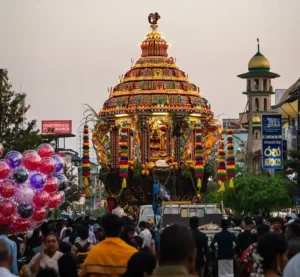
Many major temples in southern India also have imposing traditional wooden chariots. These are used during annual temple festivals, Brahmotsavam celebrations and other major religious occasions. Puri’s Rath Yatra, however, remains one of the country’s grandest and most famous chariot processions.

For the Puri procession, the three deities ride on enormous wooden chariots, freshly built and richly decorated each year. Thousands of devotees pull them with long ropes along Puri’s Grand Road amid devotional songs, drumming and prayers.

One of the most important rituals is Chhera Pahara. During this ceremony, the Gajapati ruler of Puri symbolically sweeps the chariot platforms, expressing the belief that all people are equal before the divine, whatever their status.

The deities stay at the Gundicha Temple for several days before returning to the Jagannath Temple in a procession known as Bahuda Yatra. For international travellers, the festival offers an exceptional opportunity to witness Indian religious devotion on an immense scale. Entry to the main Jagannath Temple is restricted for non-Hindu visitors, but the public procession allows people from different backgrounds to see the deities and experience the spiritual atmosphere of their sacred journey.

The monumental chariots, vast crowds, long-held rituals and extraordinary devotion make Jagannath Rath Yatra in Puri one of the most spectacular religious festivals to experience during a journey through India.

August

Matsutake Mushroom Festival

Matsutake Mushroom Festival

Ura Valley in Bumthang; related celebrations may also take place near Genekha

The Matsutake Mushroom Festival is a colourful autumn celebration of Bhutanese food, nature and community-based ecotourism. It marks the seasonal arrival of one of Bhutan’s most sought-after wild ingredients: the matsutake, a mushroom particularly prized for its aroma and flavour. Known locally as Sangay Shamu, it grows naturally in the kingdom’s unspoilt mountain forests, particularly beneath pines at higher altitudes. Difficult to cultivate commercially and available for only a short harvesting season, matsutake is highly sought after both in Bhutan and abroad.

Matsutake celebrations are particularly associated with the village of Genekha, near Thimphu, and the beautiful Ura Valley in Bumthang. Both areas are known for their forests and traditions of gathering wild mushrooms. During the festival season, local communities celebrate their connection with the forest through traditional cooking, cultural performances and activities focused on harvesting and preparing matsutake.

For international travellers, the Matsutake Mushroom Festival offers a delicious combination of culinary discovery, exploration of Himalayan forests and rural traditions. With local guides who know their surroundings well, visitors can join walks focused on finding and identifying mushrooms, learn to recognise different species and discover traditional ways of harvesting matsutake responsibly. Outdoor cooking demonstrations and tastings then offer a chance to try different dishes made with freshly gathered mushrooms.

For travellers interested in culinary journeys, nature and responsible tourism, the festival reveals a delicious and lesser-known side of Bhutan. Searching for Sangay Shamu in Himalayan forests, learning from knowledge passed down within local communities and sharing dishes made with the day’s harvest create an authentic experience connecting biodiversity, culinary traditions and village life.

Onam

Onam

Kerala

Onam is Kerala’s great harvest festival and one of the most colourful cultural celebrations in southern India. According to a popular legend, Onam marks the annual return of King Mahabali, a generous and virtuous ruler whose reign is remembered as a golden age of equality, prosperity and happiness. Celebrated across Kerala’s communities, Onam reflects the state’s cultural identity, agricultural heritage and spirit of togetherness.

Onam celebrations in Kerala traditionally last ten days, from Atham to Thiruvonam. The final day is the most important of the festival. Families decorate the entrances to their homes with Pookalams, beautiful floral carpets made from petals of different colours. People wear traditional clothes, visit temples, exchange gifts and gather to share Onasadya, a lavish vegetarian feast featuring many Kerala specialities served on a banana leaf.

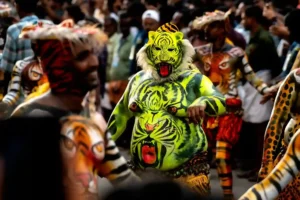
Among the festival’s most spectacular attractions are the Vallam Kali, Kerala’s famous snake boat races. Large teams of rowers propel these long traditional boats along rivers and backwaters to the powerful rhythm of boat songs. Pulikali, or the tiger dance, offers another unforgettable spectacle: performers paint their bodies to resemble tigers and dance through the streets to energetic drumbeats.

Traditional Kathakali performances, Thiruvathira dances, music, decorated elephants and colourful cultural processions add to the exceptional festive atmosphere. For travellers seeking an authentic cultural experience in Kerala, the combination of ancient legends, beautiful traditions, delicious local food and shared celebration makes Onam one of the most memorable festivals to experience in India.

Nallur Kandaswamy Kovil

Nallur Kandaswamy Kovil

Nallur Kandaswamy Kovil, Jaffna

The festival at Nallur Kandaswamy Kovil, also known as Nallur Thiruvizha, is one of Sri Lanka’s largest and most important Tamil Hindu festivals. Held each year at the historic Nallur Kandaswamy temple in Jaffna, this extraordinary celebration continues for 25 consecutive days. It honours Murugan, one of the most revered deities in Tamil Hindu tradition. His sacred spear, the Vel, holds particular religious significance.

Throughout the festival, a series of ceremonies and processions transforms the temple and its surroundings into an important place of pilgrimage and devotion. During the main processions, sacred images are carried around the temple grounds on richly decorated ceremonial vehicles called vahanams. Many devotees gather to pray, carry kavadi and fulfil religious vows amid temple bells and drums, the scent of incense and vivid colours.

For international travellers, the Nallur festival offers a remarkable opportunity to discover the living Tamil Hindu culture of Jaffna and northern Sri Lanka. Each stage of the celebration reveals a different aspect of its religious traditions, from the impressive vahanam processions and hypnotic kavadi dances to deeply personal acts of devotion and penance performed by devotees honouring their vows.

One of the most spectacular moments is Ther Thiruvizha, the great chariot festival. Devotees pull a majestic temple chariot through the streets as an immense crowd gathers around the procession, creating one of the most visually and spiritually powerful moments of the 25-day celebration.

For travellers planning a cultural journey through northern Sri Lanka, Nallur Thiruvizha offers an exceptional encounter with the traditions, spirituality and identity of the island’s Tamil community. The festival is particularly rewarding for photography enthusiasts and travellers interested in portrait photography tours: brightly coloured ceremonial clothing, kavadi bearers, expressive faces, temple rituals and immense processions offer remarkable photographic opportunities. More than a religious celebration, Nallur helps visitors understand Jaffna and discover a cultural heritage that remains deeply alive in northern Sri Lanka.

Kandy Esala Perahera

Kandy Esala Perahera

Temple of the Sacred Tooth Relic and Kandy city centre.

Kandy Esala Perahera, also known as the Festival of the Tooth, is Sri Lanka’s grandest and one of its most famous cultural and Buddhist processions. It takes place over a series of spectacular nights each year in the historic city of Kandy, surrounded by hills. The celebration honours the sacred relic of the Buddha’s Tooth, which is kept at Sri Dalada Maligawa, the famous Temple of the Sacred Tooth Relic.

The festivities traditionally begin with Kap Situveema, a sacred ritual associated with the four historic Devales dedicated to Kandy’s protective deities: Natha, Vishnu, Kataragama (Skanda) and Pattini. As the evenings pass, the processions gradually grow in scale and splendour. Temple officials, traditional drummers, dancers, torchbearers, flag bearers and beautifully adorned elephants fill Kandy’s historic streets. The festival brings together Buddhist devotion and centuries-old traditions associated with the city’s protective deities.

For international travellers, witnessing Kandy Esala Perahera is one of Sri Lanka’s most extraordinary cultural experiences. One of the most anticipated moments is the appearance of the majestic Maligawa elephant, wearing an elaborately embroidered ceremonial covering illuminated by countless small lights. It carries a sacred casket symbolising the Buddha’s Tooth Relic, while the relic itself remains carefully preserved inside the Temple of the Sacred Tooth Relic.

Kandy’s traditional dancers are equally unforgettable. Dressed in elaborate costumes with distinctive silver ornaments and ceremonial headdresses, they spin, leap and stamp to the powerful rhythms of traditional percussion ensembles. The deep resonance of drums such as the geta beraya, the glow of hundreds of torches and the dancers’ continuous movement transform Kandy’s streets into an extraordinary night-time spectacle.

For travellers planning a cultural journey through Sri Lanka, Kandy Esala Perahera offers an exceptional encounter with the island’s Buddhist heritage, royal traditions and living arts. It is also remarkable for photography enthusiasts and travellers interested in portrait photography tours: torchlight, the expressive faces of the dancers, traditional costumes, musicians and ceremonial processions provide exceptional opportunities to capture Sri Lanka’s living culture. More than a spectacular procession, Kandy Esala Perahera reveals traditions of faith, ritual and artistic expression that remain deeply rooted in the cultural identity of Kandy and Sri Lanka.

Gai Jatra

Gai Jatra

Bhaktapur, Kathmandu and Patan; Bhaktapur offers the most distinctive street experience

Gai Jatra, literally meaning the “Festival of Cows”, is one of Nepal’s most moving and colourful traditions, making it a highlight for travellers interested in culture. Celebrated mainly by the Newar community in the Kathmandu Valley, this distinctive festival brings together deep grief and joyful laughter. Families who have lost a loved one during the past year join lively processions led by a cow—or a child dressed as a cow. According to Hindu belief, this sacred animal guides wandering souls across the mythical Vaitarani River towards the afterlife. What begins as a moving tribute gradually becomes a celebration of comic performances, elaborate masks, music and social satire, reflecting a Newar tradition of easing grief through solidarity and humour. As the procession winds through historic squares, local people offer fruit, bread and money to participants, while the valley echoes with the sound of traditional dhime drums and the rhythmic Ghintang Ghisi dance.

For international travellers, particularly those on solo journeys or portrait photography tours, Gai Jatra offers a powerful sensory experience and a deeper understanding of local culture. Visiting the centres of these historic towns during the festival gives travellers an unforgettable glimpse of Nepal’s rich heritage and warm local hospitality—an experience for curious travellers seeking authentic encounters.

September

Janmashtami

Janmashtami

Uttar Pradesh, Maharashtra, Rajasthan, Madhya Pradesh

Janmashtami is a vibrant Hindu festival celebrating the birth of Lord Krishna, the beloved deity associated with love, joy and compassion. According to the Hindu calendar, Krishna is believed to have been born at midnight on the eighth day of Krishna Paksha, during the month of Bhadrapada.

One of the festival’s most spectacular attractions is Dahi Handi, also called Matki Phod in some regions. This joyful tradition is celebrated in several Indian states, including Maharashtra, Rajasthan, Madhya Pradesh and Uttar Pradesh. Groups of young participants known as Govindas recreate the playful exploits of Krishna and his cowherd friends by forming an impressive human pyramid to reach an earthen pot filled with yoghurt or butter, suspended high above the street. The person at the top must break the pot while the cheering crowd splashes the team with water to make the challenge even harder.

Teams from different neighbourhoods often compete for a title and prize. Accompanied by music, dancing and passionate crowds, Dahi Handi during Janmashtami creates an incredibly energetic atmosphere that is colourful and unforgettable.

Ganesh Chaturthi

Ganesh Chaturthi

Across India

Ganesh Chaturthi, also known as Vinayaka Chaturthi, is a major Hindu festival celebrated across India in honour of the birth of Lord Ganesha, the elephant-headed deity associated with wisdom, prosperity and new beginnings. Ganesha is revered as Vighnaharta, the remover of obstacles. Devotees traditionally seek his blessings before starting a project, opening a business, setting out on a journey or taking an important step in life.

The main Ganesh Chaturthi celebrations span ten days and begin with the ceremonial welcome of Ganesha. Families, neighbourhoods and community groups bring carefully crafted Ganesha statues into their homes or install them in elaborately decorated public pandals. Each day, devotees offer prayers, perform aarti, sing devotional songs and prepare prasad, especially modaks, the sweet dumplings traditionally associated with Ganesha. From family gatherings to enormous public celebrations, each region brings its own traditions and local culture to the festival.

The length of time a statue is kept varies according to family and community customs. Some are immersed after one and a half, three, five or seven days, while the largest and most spectacular Ganpati Visarjan processions generally take place on Anant Chaturdashi, the festival’s final day. The statues travel through villages, cities and lively streets in colourful processions before being immersed in a river, lake, designated artificial pool or the sea. The immersion symbolises Ganesha’s return to his divine home.

Thousands of devotees accompany the Ganpati Visarjan processions, chanting “Ganpati Bappa Morya!”, dancing energetically, beating drums and filling the streets with music and brightly coloured gulal powder. For European travellers, experiencing Ganesh Chaturthi in India can be a striking experience. The vast crowds, powerful drum rhythms, colourful festivities and extraordinary public expression of devotion create a spectacle rarely seen in Europe. Ganesh Chaturthi is a religious festival and an unforgettable celebration of faith, community, creativity and collective joy, experienced differently across the many regions of India.

Haritalika Teej

Haritalika Teej

Pashupatinath Temple, Kathmandu; temples and communities across Nepal

Haritalika Teej is one of Nepal’s most important Hindu festivals. Celebrated over three days, it centres on women and their devotion to the goddess Parvati and her divine union with Lord Shiva. The celebration has three main stages: Dar Khane Din, a feast that joyfully begins the festivities; a day of fasting and temple visits, when women perform sacred rituals honouring the divine couple; and Rishi Panchami, a day of purification that brings the festival to a peaceful close.

For travellers seeking authentic experiences on cultural tours of Nepal, the festival offers a rare glimpse of a living tradition in which long-held customs, community spirit and personal devotion come together.

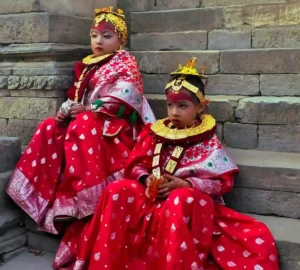
Throughout the celebration, women gather in streets and temple courtyards wearing bright red saris, green glass bangles and beautiful gold jewellery. They sing traditional songs and dance in a spirit of shared joy. The festival beautifully brings together religious observance, family ties and friendship. Many women share a feast before beginning a fast according to their personal or family traditions. The rituals, colours and community celebrations make Teej one of Nepal’s most visually striking cultural experiences.

For international travellers seeking immersive experiences, Haritalika Teej offers an incredible opportunity to discover Nepal’s living traditions, particularly for those interested in portrait photography, cultural tours and anthropological travel. In public streets and squares, thousands of women dressed in red, green and gold create a vivid scene of colour, devotion and tradition. Whether you are a travel photographer hoping to capture expressive portraits where photography is permitted, a culture-loving traveller eager to understand Nepali heritage, or simply someone drawn to authentic festivals in Nepal, Haritalika Teej offers an unforgettable and deeply rewarding encounter with Himalayan culture.

Thimphu Tshechu

Thimphu Tshechu

Tendrel Thang festival ground next to Tashichho Dzong, Thimphu

Thimphu Tshechu is one of Bhutan’s grandest and best-known religious and cultural festivals. Held each autumn against the majestic backdrop of Tashichho Dzong, the imposing fortress-monastery that houses the throne room and offices of the King of Bhutan, this spectacular three-day festival brings thousands of people together in the heart of the capital. Dedicated to Guru Rinpoche (Padmasambhava), the revered Buddhist master who introduced Tantric Buddhism to Bhutan, Thimphu Tshechu is a remarkable expression of the kingdom’s Buddhist faith, cultural identity and living traditions.

During the festivities, monks and specially trained lay dancers perform a series of sacred Cham dances, accompanied by ritual music, striking masks and richly decorated costumes. Far more than colourful performances, these dances convey Buddhist teachings, invoke protective deities and depict the triumph of wisdom and compassion over negative forces through powerful visual storytelling.

The audience is almost as fascinating as the ceremonies themselves. Bhutanese families from different parts of the country gather wearing their finest gho and kira, transforming the festival grounds beside the dzong into an extraordinary mosaic of colours, traditional textiles and jewellery. The festival is also a time for reunions: relatives and friends meet, share festive meals and celebrate together, giving travellers a glimpse of the richness of Bhutanese community life.

For international travellers, Thimphu Tshechu offers a chance to experience Bhutan’s Buddhist traditions in a particularly lively atmosphere. The expressive faces of monks and spectators, elaborate masks, richly woven fabrics and families in traditional dress provide exceptional opportunities for cultural photography and portraits. For travellers interested in cultural tours and photography journeys through Bhutan, Thimphu Tshechu is one of the most spectacular occasions to capture the colours, faces and traditions of the Himalayan kingdom.

Indra Jatra and Kumari Jatra

Indra Jatra and Kumari Jatra

Kathmandu Durbar Square and the procession routes through the old city

Indra Jatra is Kathmandu’s great celebration in honour of Indra, the god of rain, and one of the finest expressions of Newar culture. During this colourful festival, an 11-metre ceremonial wooden pole is raised in Durbar Square, masked dancers—including the fierce and beloved Lakhey—move through the old city, and ancient shrines normally hidden from view are opened to the public. According to local legend, Lord Indra came down to Kathmandu disguised as a human to take a rare night-blooming jasmine flower for his mother. The people captured and imprisoned him before discovering his divine identity and releasing him. In return, his mother promised the mist and rain essential for farming. To honour this story, local people raise the imposing Yasin pole to represent Indra’s banner and display masked images of the god with his hands bound. Together, these traditions make the city fascinating for curious travellers seeking authentic experiences and those drawn to in-depth cultural tours.

The festival reaches its peak during Kumari Jatra, when three wooden chariots are pulled through the streets: a large one carrying the Living Goddess Kumari and two smaller ones carrying representatives of Ganesh and Bhairav. Nepal’s head of state and foreign diplomats may also gather at the historic Hanuman Dhoka palace to receive the young Living Goddess’s blessings.

For international travellers, the festival turns Kathmandu into a living museum, filled with intense energy, traditional music and dramatic street performances. Watching crowds pull the chariots through narrow streets inspires an incredible sense of wonder. For travellers on a portrait photography tour, the masked dancers and devoted crowds offer opportunities to capture extraordinary images full of expression. Another breathtaking sight is the offering from Sweta Bhairav: consecrated traditional rice beer flows through a pipe in the mouth of a giant, fierce-looking mask towards the gathered devotees. Receiving even a drop is believed to bring good fortune and health for the year ahead, offering a truly unforgettable glimpse of Nepal’s vibrant spiritual life.

Ladakh Festival

Ladakh Festival

Leh, Ladakh

The Ladakh Festival is one of the region’s most vibrant cultural celebrations. Held in Leh against the spectacular backdrop of the Himalayas, it was created to preserve and celebrate the living heritage of Ladakh. Over several days, it brings together communities and cultural groups from across this Himalayan region.

The festivities include a colourful procession through the streets of Leh, with participants wearing traditional Ladakhi dress and performing music and folk dances. Visitors can also enjoy cultural performances and traditional sports, explore local crafts, taste regional food and discover exhibitions about the customs and daily lives of Ladakh’s communities.

For international travellers, the Ladakh Festival offers a wonderful introduction to the culture of this remote part of the Himalayas. Its elaborate costumes, joyful performances, long-held traditions and dramatic mountain scenery make it one of the most memorable cultural festivals to experience during a trip to Ladakh.


October

Mysuru Dasara

Mysuru Dasara

Mysore (Mysuru), Karnataka

Mysuru Dasara, also known as Mysore Dasara, is Karnataka’s majestic royal festival and one of the most spectacular Dussehra celebrations in southern India. The ten-day festival is spiritually dedicated to Goddess Chamundeshwari, the protective deity of Mysuru. According to Hindu mythology, she defeated the demon king Mahishasura, symbolising the victory of good over evil. While Dussehra in much of northern and western India commemorates Lord Rama’s victory over Ravana — often through the burning of giant effigies of Ravana, Kumbhakarna and Meghnad — Mysuru Dasara celebrates Karnataka’s own royal, cultural and spiritual traditions.

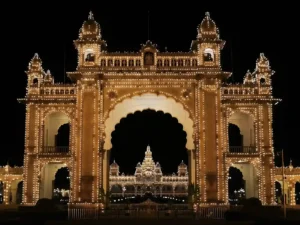
Known as Nada Habba, Karnataka’s state festival, Mysuru Dasara transforms the historic city into a magnificent display of devotion, heritage and royal splendour. Each evening during the festivities, Mysuru Palace is illuminated by around 100,000 bulbs, creating a dazzling golden spectacle in the heart of the city. Across the ten days, cumulative attendance is estimated at four to five million people, including countless spectators who watch without a ticket from the streets, rooftops, balconies and even trees, hoping to catch a glimpse of the celebrations.

The festival’s main attraction is the elephant procession known as Jamboo Savari, held on Vijayadashami, the tenth and final day of the celebrations. During this majestic royal procession, an image of Goddess Chamundeshwari is placed in the Chinnada Ambari, a magnificent historic golden howdah weighing around 750 kg, and carried through the crowded streets on the back of a specially selected, elaborately decorated elephant.

Ahead of the elephants, colourful floats and tableaux representing Karnataka’s different regions, traditions and cultural heritage parade alongside folk dancers, musicians, marching bands, horses and camels dressed for the occasion. The atmosphere is extraordinary, and the crowds sometimes become so dense that mobile networks can struggle to cope. Reserved paid viewing stands are also set up along parts of the route to give visitors a better view. With its illuminated royal palace, majestic elephants, colourful cultural performances and unforgettable Jamboo Savari procession, Mysuru Dasara is one of the most impressive festivals to experience in Karnataka and across India.

Navratri

Navratri

Northern and western India

Navratri, which literally means “nine nights” in Sanskrit, is one of India’s most vibrant Hindu festivals. Dedicated to the Divine Feminine, or Shakti, it symbolises the victory of good over evil. In Hindu tradition, the goddess Durga is worshipped in nine forms, collectively known as Navadurga, with each night honouring one of them. The festival concludes with Vijayadashami, a celebration of divine victory.

During Navratri, devotees fast, visit temples and take part in prayers, aarti and yajnas, ritual ceremonies performed around a sacred fire. Homes and places of worship are decorated, devotional songs fill the air and communities gather to honour the goddess Durga. Customs vary from one region to another, but the nine nights are celebrated across India with remarkable devotion, energy and colour.

For European travellers, joining the traditional dances of Garba and Dandiya Raas can be one of the most exciting experiences of Navratri in India. During Garba, people in colourful traditional dress dance in large circles, following rhythmic steps and clapping their hands. Dandiya Raas uses two decorated wooden sticks, which dancers strike together as they move in coordinated patterns. Traditional folk music and devotional music are now often mixed with popular Bollywood-inspired songs, creating a joyful atmosphere full of energy.

Watching hundreds or even thousands of people dance together beneath sparkling lights — or stepping onto the dance floor to join them — gives travellers an unforgettable cultural experience. Swirling traditional costumes, colourful jewellery, the rhythmic sound of wooden sticks and the power of the music create a spectacle on a scale rarely seen in Europe. Navratri is a beautiful expression of spirituality, togetherness and collective joy, giving visitors a chance to take part in the celebrations themselves.

Dashain

Dashain

Across Nepal; best understood through local communities and family life

Dashain is Nepal’s longest and most important Hindu festival. Celebrated over fifteen days, it symbolises the victory of good over evil and the divine power of the goddess Durga. More than a religious festival, Dashain is a time for family reunions, blessings, traditions and sharing that brings communities together across the country.

The celebrations begin with Ghatasthapana, when families sow barley and maize seeds in a sacred container filled with soil. Kept away from direct sunlight, the seeds gradually grow into yellow-green shoots called Jamara, which are later used to bless family members. As Dashain approaches, homes are cleaned and decorated, markets become busy with festive preparations, and many Nepalis travel long distances to reunite with family in their villages or ancestral homes. Temples dedicated to the goddess Durga also become important places for prayers and offerings.

One of the most remarkable historic traditions takes place during Fulpati, when a ceremonial procession carries flowers, leaves and sacred plants from Gorkha to Kathmandu. The most important family moment arrives on the tenth day, during Vijaya Dashami. Elders place a red Tika on younger relatives’ foreheads, give them sacred Jamara shoots and offer blessings for health, prosperity and long life. Family visits and blessings continue over the following days until Kojagrat Purnima, the full-moon day traditionally associated with the goddess Lakshmi that marks the end of Dashain.

Dashain in Nepal and Navratri–Dussehra in India share deep Hindu spiritual roots. Both celebrations are associated with the goddess Durga and the victory of good over evil, and reach a high point around Vijaya Dashami, widely known in India as Dussehra. Yet Dashain has a distinctly Nepali identity, particularly in its emphasis on large family reunions, blessings with Tika and Jamara, and rituals that continue for fifteen days.

For international travellers, Dashain offers an exceptional opportunity to discover Nepali culture beyond monuments and conventional sightseeing. Traditional music, lively markets, kites in the sky and enormous bamboo swings called Ping bring a festive atmosphere to towns and villages. Yet the emotional heart of Dashain is found within families, as several generations gather over meals, exchange blessings and strengthen their bonds. For travellers interested in cultural tours of Nepal and authentic experiences, the atmosphere of Dashain offers a special insight into the traditions, spirituality and family life at the heart of Nepali society.
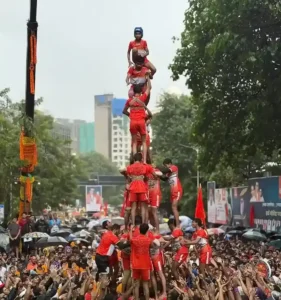
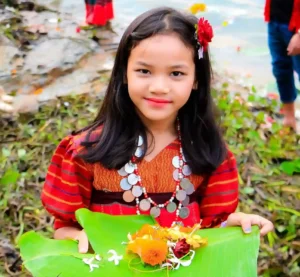
Durga Puja

Durga Puja

Kolkata and West Bengal

Durga Puja is one of India’s most spectacular religious and cultural festivals. It is celebrated with exceptional devotion in West Bengal and other parts of eastern India. The festival honours the goddess Durga and her victory over the demon Mahishasura, symbolising the triumph of good over evil. Long before the celebrations begin, Kumartuli, the historic artisans’ quarter in north Kolkata, comes alive as generations of craftspeople create handcrafted clay images of the goddess on traditional bamboo and straw frames. Watching these works gradually take shape offers travellers a fascinating glimpse of the festival’s preparations.

During Durga Puja, thousands of richly decorated temporary pavilions called pandals turn Kolkata into an immense open-air art gallery. The sound of traditional dhak drums, religious ceremonies, cultural performances and the energetic Dhunuchi dance create an unforgettable atmosphere. The celebrations end on Vijayadashami with moving processions and the immersion of Durga’s images in the river. Inscribed in 2021 on the UNESCO Representative List of the Intangible Cultural Heritage of Humanity, Durga Puja in Kolkata offers travellers a remarkable encounter with spirituality, artistic creativity and collective joy.

Dussehra

Dussehra

Northern, central and western India

Dussehra, also known as Vijayadashami, is one of India’s most spectacular Hindu festivals. Celebrated after the nine nights of Navratri, it commemorates Lord Rama’s victory over Ravana, the ten-headed demon king, and symbolises the triumph of good over evil. According to the ancient Hindu epic the Ramayana, Rama defeated Ravana after a fierce battle and rescued his wife Sita, who had been held captive in Lanka.

Another important Dussehra tradition is Shastra Puja, the ritual worship of weapons. In many Indian households, particularly among Rajput families and others with a martial heritage, ancestral swords and traditional weapons are carefully cleaned, decorated with flowers, marked with a sacred tilak and placed before the family deity for blessings. The ritual honours them as instruments of protection and recalls the responsibility to use strength with discipline and in defence of dharma.

In the days leading up to Dussehra, towns and villages across many parts of India stage open-air performances of Ramlila. Through colourful costumes, music, dialogue and dramatic battle scenes, local performers bring episodes from Rama’s life and the Ramayana to audiences. Ramlila is more than a theatrical performance: it is a living cultural tradition passed down through generations and recognised by UNESCO as part of humanity’s intangible cultural heritage.

One of Dussehra’s most dramatic moments comes after sunset on Vijayadashami. Giant effigies of Ravana, his brother Kumbhakarna and his son Meghnad — often filled with fireworks — are set alight before cheering crowds. As the towering figures disappear in flames and explosions light up the night sky, their destruction symbolises the defeat of arrogance, injustice and evil. It is a powerful expression of the belief that truth, courage and justice will ultimately prevail.

Many celebrations also include lively Dussehra fairs, with music, food stalls, traditional games, rides and families gathering to watch the final burning of the effigies. For European travellers, experiencing Dussehra in India offers a fascinating combination of sacred storytelling, open-air theatre, popular festivities and dramatic visual spectacle. The vast crowds, monumental effigies, flames and roar of the fireworks create a memorable cultural experience rarely encountered in Europe.

Mani Rimdu

Mani Rimdu

Tengboche Monastery (also known as Dawa Choling Gompa)

Mani Rimdu is one of Nepal’s most important Buddhist festivals, celebrated by the Sherpa community in the Everest region (Khumbu). Held according to the Tibetan lunar calendar, usually in October or November, the festival brings together ancient rituals, sacred dances and the spiritual traditions of the Himalayas.

The best-known place to experience Mani Rimdu in Nepal is Tengboche Monastery, perched at approximately 3,860 metres above sea level on the trekking route to Everest Base Camp. After several days of prayers and monastic ceremonies, the principal rituals open to the public over three particularly spectacular days.

The head lama blesses local people and visitors and distributes Mani Rilwu, small consecrated pills associated with spiritual well-being and longevity. The festival’s highlight, however, is the Cham masked dances. Wearing colourful brocade robes and elaborate masks, the monks perform symbolic dances to the sound of horns, cymbals and traditional drums.

For travellers, experiencing Mani Rimdu at Tengboche offers a chance to combine a trek in the Everest region with a genuine immersion in Sherpa culture and Tibetan Buddhism. The sacred dances, monastery, people of Khumbu and spectacular Himalayan scenery make this a powerful experience during a cultural or adventure journey through Nepal. It is also an exceptional opportunity for travellers interested in travel and portrait photography.

Jambay Lhakhang Drup

Jambay Lhakhang Drup

Jambay Lhakhang, near Jakar in Bumthang

Jambay Lhakhang Drup is one of Bhutan’s most extraordinary and revered religious festivals. Celebrated each year in the Bumthang Valley in central Bhutan, it takes place at Jambay Lhakhang, a sacred seventh-century temple considered one of the country’s oldest Buddhist shrines. With its historic setting, night-time ceremonies and particularly unusual sacred rituals, the festival offers a fascinating insight into Bhutanese Buddhist beliefs, legends and living spiritual traditions.

Among its most impressive ceremonies is Mewang, or the Fire Blessing, held after nightfall. A large gateway-shaped structure is set alight, and the crowd passes beneath the flaming arch in a traditional ritual associated with purification, protection and blessings. In the darkness, the flames, prayers and many devotees gathered around the ceremony create one of the festival’s most spectacular and moving moments.

Another exceptional tradition is Tercham, or the Treasure Dance, a sacred ritual associated with Pema Lingpa, the great Bhutanese religious master and renowned discoverer of spiritual treasures. Traditionally performed late at night, Tercham is a famous ritual dance performed without clothing and is particularly associated with Jambay Lhakhang Drup. It is connected with beliefs about fertility, spiritual blessings and the removal of obstacles. The festival also includes sacred Cham dances and other religious ceremonies attended by monks, villagers and pilgrims.

For international travellers, witnessing Jambay Lhakhang Drup reveals a particularly rare dimension of Bhutanese Buddhist culture. From the spectacular Mewang ritual to the sacred traditions of Tercham beneath the night sky of Bumthang, this celebration brings together ancient beliefs, spirituality and traditions passed down through generations. For travellers interested in cultural tours, Buddhist traditions and authentic experiences in Bhutan, Jambay Lhakhang Drup is one of the most distinctive and memorable occasions to experience during a journey through the Himalayan kingdom.

November

Tihar – Nepal’s Festival of Lights

Tihar – Nepal’s Festival of Lights

Kathmandu Valley and communities across Nepal

Tihar, also known as Deepawali, is Nepal’s great Festival of Lights. Celebrated over five days, it is the country’s second most important festival after Dashain. Although it shares Hindu origins with Diwali in India, Tihar has traditions that are distinctly Nepali. The festival honours the goddess Lakshmi as well as several animals with symbolic roles in Hindu culture and beliefs.

Each day has its own rituals. Tihar begins with Kaag Tihar, the day of the crows, when families leave food offerings for them. Next comes Kukur Tihar, perhaps one of the most surprising days for travellers: dogs are honoured for their loyalty and their role in Hindu tradition. Pet dogs and street dogs alike receive a red tika on the forehead, wear beautiful marigold garlands and are offered food.

The third day is Gai Tihar, honouring cows. In the evening comes Lakshmi Puja, one of the festival’s brightest moments. Homes and businesses are decorated with oil lamps, candles and strings of lights to welcome Lakshmi, the goddess of wealth and prosperity.

Fourth-day traditions vary by region and community. They include Goru Tihar, honouring oxen, and Govardhan Puja. Newar communities in the Kathmandu Valley also celebrate Mha Puja, a fascinating ceremony focused on the self, purification and spiritual renewal. Tihar ends with Bhai Tika, a particularly moving celebration of the bond between brothers and sisters. Sisters place a multicoloured tika on their brothers’ foreheads and pray for their health and long life, while families exchange gifts and blessings.

At nightfall, the atmosphere changes completely. Homes, temples, shops and streets glow with thousands of small lights, while brightly coloured rangoli decorate entrances. Groups of children and young people move from house to house, singing and dancing as part of the traditional Deusi-Bhailo, before receiving sweets, food or a few coins in return.

For international travellers, Kukur Tihar is surely one of the festival’s most surprising and touching sights. Seeing streets filled with dogs wearing tika and flower garlands, surrounded by care and offered food, is a scene rarely found elsewhere. These flower-adorned dogs have become one of the best-known images of Tihar around the world.

For travellers interested in cultural tours of Nepal and portrait photography, Tihar is an exceptional time to discover the country. Lights, flowers, faces, rituals, music and everyday scenes offer countless moments to observe and photograph. Perhaps that is the charm of Tihar: you do not need to enter a monument to experience the festival. Often, you only need to walk through the streets and watch Nepal celebrate around you.

Diwali

Diwali

Across India

Diwali, the famous Festival of Lights, is one of India’s grandest and most spectacular celebrations. It symbolises the spiritual victory of light over darkness, good over evil and knowledge over ignorance. During Diwali, homes, temples, markets and streets glow with countless lamps and colourful lights, transforming the country into a dazzling spectacle.

According to a tradition widely observed in northern India, Diwali commemorates Lord Rama’s return to Ayodhya with Sita and Lakshmana after fourteen years of exile and his victory over the demon king Ravana. The people of Ayodhya are said to have welcomed them by lighting up the entire city with rows of small oil lamps called diyas.

On Diwali evening, families perform Lakshmi Puja to seek the blessings of Goddess Lakshmi, associated with prosperity and good fortune. People decorate their homes with rangolis, light diyas, exchange gifts and sweets, wear traditional clothes and enjoy fireworks. The extraordinary colours, illuminations, traditions and joyful atmosphere of Diwali attract travellers from around the world, offering them an unforgettable experience of Indian culture.

Deepavali in Sri Lanka

Deepavali in Sri Lanka

Jaffna, Trincomalee, Batticaloa, Colombo and Tamil communities across Sri Lanka

Deepavali, the name commonly used in Sri Lanka rather than Diwali, is an important Hindu festival and a national public holiday, celebrated mainly by the island’s Tamil Hindu community. Known as the Festival of Lights, it symbolises the victory of light over darkness, knowledge over ignorance, and good over evil.

The celebrations are particularly important in areas with large Tamil communities, especially the Jaffna Peninsula in northern Sri Lanka, Trincomalee and Batticaloa on the east coast, and Tamil communities in the Central Highlands and tea-growing regions. Homes are cleaned and decorated, oil lamps are lit, families wear new clothes, prayers are held in Hindu temples, and festive dishes and sweets are prepared and shared.

Although Deepavali in Sri Lanka shares the symbolism of the Festival of Lights celebrated in India and many other parts of the world, its traditions reflect the close cultural ties between Sri Lankan Tamils and Tamil Hinduism in southern India. In many Tamil traditions, Deepavali is associated with Krishna’s victory over the demon Narakasura, symbolising the triumph of good over evil. The Sri Lankan celebration therefore has its own cultural character while remaining part of the wider Hindu tradition of Deepavali.

For international travellers, experiencing Deepavali reveals another cultural dimension of Sri Lanka, particularly in Jaffna and other areas with large Tamil communities. Hindu temples become important places of prayer and celebration, while glowing oil lamps, colourful clothing, family gatherings and festive preparations create a warm atmosphere in Tamil neighbourhoods.

Food and hospitality may also become some of the most enjoyable memories of the experience. Travellers may have the opportunity to share traditional festive specialities with local families and communities, including sweet laddus and crispy savoury murukku. For those planning a cultural journey through northern or eastern Sri Lanka, Deepavali offers a wonderful opportunity to discover Tamil traditions, Hindu heritage, local food and community life. It reveals another side of the island’s extraordinary cultural diversity.

Black-necked Crane Festival

Black-necked Crane Festival

Gangtey Gonpa in the Phobjikha Valley, Wangdue Phodrang

The Black-necked Crane Festival is a warm community celebration of culture and conservation, held over one day to mark the annual arrival of the rare and treasured black-necked cranes. Each winter, these majestic Himalayan birds migrate from the Tibetan Plateau to the wetlands and wide, unspoilt landscapes of the Phobjikha Valley in central Bhutan, one of their principal wintering grounds in the kingdom.

Held each year in the majestic setting of Gangtey Monastery, whose origins date back to the seventeenth century, the festival has a very different character from Bhutan’s traditional religious tshechus. This joyful celebration, organised with the involvement of local communities, raises awareness of the need to protect the black-necked cranes and their fragile habitat while encouraging responsible, sustainable tourism in the Phobjikha Valley.

One of the most anticipated moments is the famous Crane Dance, performed by local schoolchildren who charmingly imitate the movements, behaviour and calls of these emblematic birds. Villagers, monks and young performers also take part in traditional dances, folk songs, masked performances and plays that share messages about wildlife protection and the conservation of the valley’s natural environment. Local people wear beautiful, handwoven traditional clothing—the gho for men and the kira for women—adding even more colour to this community celebration.

For international travellers, the Black-necked Crane Festival brings together wildlife watching, Bhutanese culture and nature conservation. Visitors can enjoy the Crane Dance, discover traditions such as Zhey and Boedra, and see local communities gathered in one of Bhutan’s most beautiful natural landscapes.

For travellers interested in ornithology, wildlife photography, birdwatching and responsible tourism, combining the festival with the chance to observe black-necked cranes in the Phobjikha Valley is an exceptional experience. It is a wonderful opportunity to discover how Bhutan seeks to protect both its cultural traditions and the extraordinary biodiversity of its Himalayan landscapes.

Wangala

Wangala

Wangala A dam, Chibragre (near Asanang and Tura), West Garo Hills district.

The Wangala Festival, better known as the “100 Drums Festival”, is the Garo people’s most important harvest celebration in Meghalaya. Held in honour of Saljong, the Sun God associated with fertility and prosperity, it is a time to give thanks for an abundant harvest. It also marks the end of the farming season and the arrival of winter.

During the festival, men and women in colourful traditional dress and striking feathered headdresses perform rhythmic dances to the powerful sound of long drums, gongs, flutes and instruments made from buffalo horns. The dancers move in parallel lines, stepping together as the rhythm of the drums changes. Traditional rituals, music, local food and community gatherings help preserve and celebrate the cultural identity of the Garo people.

For international travellers, attending the Wangala Festival is a fascinating opportunity to discover the living traditions of the Garo Hills in Meghalaya. The collective rhythm of the drums, graceful dances, striking costumes and joyful atmosphere make it one of the most impressive Indigenous festivals to experience in Northeast India.

Chhath Parva

Chhath Parva

Janakpur and throughout the Terai; celebrations also take place beside rivers and ponds in Kathmandu.

Chhath Parva, also known as Chhath Puja, is an ancient four-day Hindu festival dedicated to Surya Dev, the Sun God, and Chhathi Maiya, who is revered for protecting families and children. Deeply rooted in the traditions of the Terai (Madhesh) and Mithila, it is especially important in Janakpur, although it is now also celebrated in Kathmandu.

What makes Chhath distinctive is its close connection with nature: traditionally, no idol stands at the centre of its worship. After several days of purification, fasting and preparation, families place fruit, sugar cane, coconuts and Thekua pastries in bamboo baskets. Devotees then step into rivers or sacred ponds to present their offerings to the setting sun, returning before dawn to honour the rising sun.

In Janakpur, the sacred ponds create a striking scene. Thousands of lamps are reflected in the water, families gather along the ghats, and Maithili devotional songs accompany the ceremonies until sunrise.

For international travellers, Chhath reveals a side of Nepal very different from its Himalayan landscapes. The gatherings by the water, rituals, lights and colourful clothing offer a remarkable introduction to the Madheshi and Maithili cultures of southern Nepal. For travellers interested in cultural tours and portrait photography, the sunset and sunrise ceremonies are among the country’s most striking religious scenes.

Pushkar Camel Fair

Pushkar Camel Fair

Pushkar, Rajasthan

The Pushkar Camel Fair in Rajasthan attracts travellers and internationally renowned photographers, particularly enthusiasts of travel photography and portraiture. Although famous for its camels, the fair also brings together horses and other livestock from across the region. Rajasthan Tourism and local authorities organise many colourful cultural activities, including traditional folk music and dance, horse and camel contests and races, and prizes for the finest animals. This extraordinary celebration offers a feast of colour, authentic traditions and unforgettable scenes to photograph. Its spiritual side follows the Hindu lunar calendar and reaches its peak on Kartik Purnima. In Hindu tradition, Pushkar’s sacred lake is closely associated with Lord Brahma, and bathing in its waters on Kartik Purnima holds deep spiritual significance.

December

Hornbill Festival

Hornbill Festival

Kisama Heritage Village, near Kohima, Nagaland

Le festival de Hornbill, souvent surnommé « le festival des festivals », est la plus grande célébration culturelle annuelle du Nagaland et l’un des événements les plus remarquables du Nord-Est de l’Inde. Organisé au village patrimonial de Kisama, près de Kohima, il a été créé en 2000 afin de préserver et de promouvoir les traditions des différentes communautés nagas tout en favorisant les échanges culturels.

Pendant les dix jours du festival, les représentants des tribus nagas présentent leurs danses, leurs chants folkloriques, leurs tenues cérémonielles, leurs jeux traditionnels et leurs pratiques culturelles. Les morungs tribaux reconstitués, anciennes maisons communautaires traditionnelles, permettent aux visiteurs de découvrir l’architecture et le patrimoine social propres à chaque communauté. Les festivités comprennent également des expositions d’artisanat, de la cuisine régionale, des sports autochtones, des concerts et de nombreuses démonstrations culturelles.

Pour les voyageurs internationaux, assister au festival de Hornbill au Nagaland représente une occasion exceptionnelle de découvrir en un seul lieu l’extraordinaire diversité de la culture naga. Ses impressionnants costumes traditionnels, ses spectacles énergiques, son atmosphère chaleureuse et son cadre spectaculaire au cœur des collines du Nagaland en font l’un des rassemblements culturels les plus fascinants d’Inde.

Druk Wangyel Tshechu

Druk Wangyel Tshechu

Druk Wangyel Lhakhang at Dochula Pass, between Thimphu and Punakha

Druk Wangyel Tshechu is one of Bhutan’s most distinctive, spectacular and patriotic cultural festivals. Unlike the kingdom’s traditional tshechus, whose dates generally follow the Bhutanese lunar calendar and whose sacred dances are usually performed by monks or specially trained lay dancers, Druk Wangyel Tshechu is a modern, one-day celebration held each year at the spectacular Dochula Pass. The festival was created in honour of the fourth Druk Gyalpo, King Jigme Singye Wangchuck, and Bhutan’s armed forces.

One of the festival’s most unusual features is that members of the Bhutanese armed forces perform its dances. Colourful costumes, impressive choreography and dances inspired by the kingdom’s history and traditions bring together cultural expression and a deep sense of national pride. Among the most remarkable performances is the majestic Gyalpo Zhen, performed by soldiers and now an emblematic moment of this extraordinary celebration.

The setting adds greatly to the spectacle of Druk Wangyel Tshechu. The festival takes place near the 108 Druk Wangyel Chortens at Dochula Pass, one of Bhutan’s most photogenic mountain sites. On a clear day, the view stretches towards the majestic snow-covered peaks of the Himalayas, creating an exceptional backdrop for the colourful dances, traditional costumes and ceremonies.

For international travellers, Druk Wangyel Tshechu reveals a very different side of Bhutan’s festivals. Soldiers performing in front of the 108 chortens, with the Himalayan mountains on the horizon, offer remarkable opportunities for cultural photography, landscapes and portraits. For travellers interested in cultural tours and photography tours in Bhutan, the festival brings together modern history, national identity, Bhutanese traditions and spectacular Himalayan scenery in one setting.

Vivah Panchami

Vivah Panchami

Janaki Temple and the historic centre of Janakpur

Vivah Panchami is one of Nepal’s most spectacular Hindu festivals. Celebrated in the historic city of Janakpur, it commemorates the divine marriage of Lord Rama and the goddess Sita. According to the Ramayana, their marriage took place in ancient Janakpur, the capital of the kingdom of Mithila and Sita’s birthplace.

What makes Vivah Panchami especially fascinating during a cultural journey through Nepal is that the celebration unfolds like a full-scale royal wedding. Thousands of devotees join the festivities, regarding Sita as Janakpur’s beloved daughter and Lord Rama as their honoured son-in-law. The whole city becomes a vast place of celebration, with processions representing the bride and groom moving through the streets to traditional music, devotional songs and richly decorated depictions of the deities.

The celebrations centre on the beautiful Janaki Mandir, one of Nepal’s most important Hindu pilgrimage sites. Thousands of pilgrims from Nepal and India gather here, reflecting the deep cultural ties between the people of the historic Mithila region.

International travellers in Janakpur during Vivah Panchami can witness remarkable traditions such as Nagar Parikrama, Phulbari Lila and Dhanush Yagya—which recalls the legendary episode in which Rama breaks Shiva’s bow—as well as the spectacular Baraat procession representing the arrival of the groom’s wedding party. After nightfall, the beautifully illuminated Janaki Mandir is an unforgettable sight, while traditional music, rituals and Maithili cultural arts bring Mithila’s rich heritage to life.

Christmas in India

Christmas in India

Throughout India

Christmas in India is a joyful celebration that brings Christian traditions together with the country’s extraordinary cultural diversity. Churches and homes are decorated with colourful lights, nativity scenes and distinctive star-shaped lanterns, while Christmas carols, midnight Mass and community gatherings create a warm, festive atmosphere. Goa hosts some of India’s most beautiful Christmas celebrations, with historic churches, traditions shaped by Portuguese heritage, lively streets and delicious local specialities such as kulkuls and neureos. In Kerala, long-established Christian communities celebrate with beautifully illuminated churches, processions and generous family meals. In Kolkata, the famous Park Street glows with countless decorations and fills with music, while Shillong and Kohima in Northeast India come alive with choirs, concerts and public celebrations. From plum cakes and traditional Indian food to decorated markets and church services, Christmas in India lets travellers rediscover a familiar festival through the colours, flavours and hospitality of India.

Tamu Lhosar

Tamu Lhosar

Tundikhel in Kathmandu; Pokhara; Gurung villages in the mountain regions

Tamu Lhosar is the vibrant New Year celebration of Nepal’s Gurung community, also known as the Tamu. Celebrated on the fifteenth day of Poush in the Nepali calendar, it marks the beginning of a new year in the traditional Gurung astrological cycle, in which twelve different animals represent successive years.

The festival is a fascinating blend of deeply rooted family traditions, community gatherings and colourful cultural celebrations. Families pay their respects to ancestors and elders, visit monasteries, share traditional meals and come together for music and dance. Public festivities also showcase the Gurung people’s extraordinary cultural identity through traditional clothing, jewellery and ornaments, offering a beautiful glimpse of Nepal’s ethnic diversity.

For international travellers, one of the best places to experience Tamu Lhosar is Tundikhel, the vast open space in the heart of Kathmandu. During the festival, it becomes an immense cultural gathering filled with traditional food, folk music, dancing and thousands of Gurung people proudly celebrating their heritage.

Visitors can admire traditional Gurung clothing: men may wear distinctive garments and accessories such as the Bhangra, a woven pouch worn across the chest, while women wear beautiful velvet blouses, draped traditional fabrics and elegant gold jewellery and coral ornaments. Travellers may also discover Gurung cultural expressions such as the graceful Ghatu dance, an ancient form of ritual storytelling passed down through music and carefully choreographed movement. With its colourful clothing, traditional melodies and joyful celebrations, Tamu Lhosar offers a memorable experience for anyone wishing to discover the Gurung people’s living culture and traditions during a cultural journey through Nepal.

* Festival dates may change, particularly those based on lunar or religious calendars. We recommend checking the dates before finalising your trip.