Portrait Photography Tours
A Portrait Is More Than a Face
It tells a story.
Faces That Tell Stories
A face can tell a story.
A smile can tell another.
The lines on an older person’s face may speak of a lifetime. A child’s laughter can capture a moment of joy. Traditional clothing can reveal a person’s origins, region or culture. An artisan’s hands can tell the story of their craft.

Our portrait photography tours in India, Nepal, Bhutan and Sri Lanka are for photographers who want to look beyond beautiful landscapes.
They are for those who want to photograph faces, expressions, traditions, colours and emotions, as well as scenes from everyday life.
Across these four extraordinary destinations, we create photography journeys where the people you meet become an essential part of the story.
A Journey Through Colour, Faces and Traditions
India is an extraordinary destination for portrait photography.
From the tribal and Indigenous communities of central and eastern India to Rajasthan’s traditional clothing, from Himalayan communities to the lively streets of Indian towns and villages, each region tells a different visual story.
Your journey may give you the chance to photograph:
Traditional clothing and jewellery Tribal and Indigenous communities Artisans at work Farmers in their fields Musicians and performers Religious communities Monks Sadhus and ascetics
Pilgrims and worshippers Fishers Market traders Older people whose faces bear the marks of time Children at play Families going about their daily lives Vibrant celebrations and festivals Spontaneous moments in villages and towns
And sometimes, the most powerful photograph begins with a smile shared between two strangers.
Portraits and Tribal Communities
For photographers fascinated by tribal and Indigenous cultures, we can plan routes through regions where traditional clothing, crafts, architecture and ways of life offer exceptional photographic opportunities.
Jharkhand
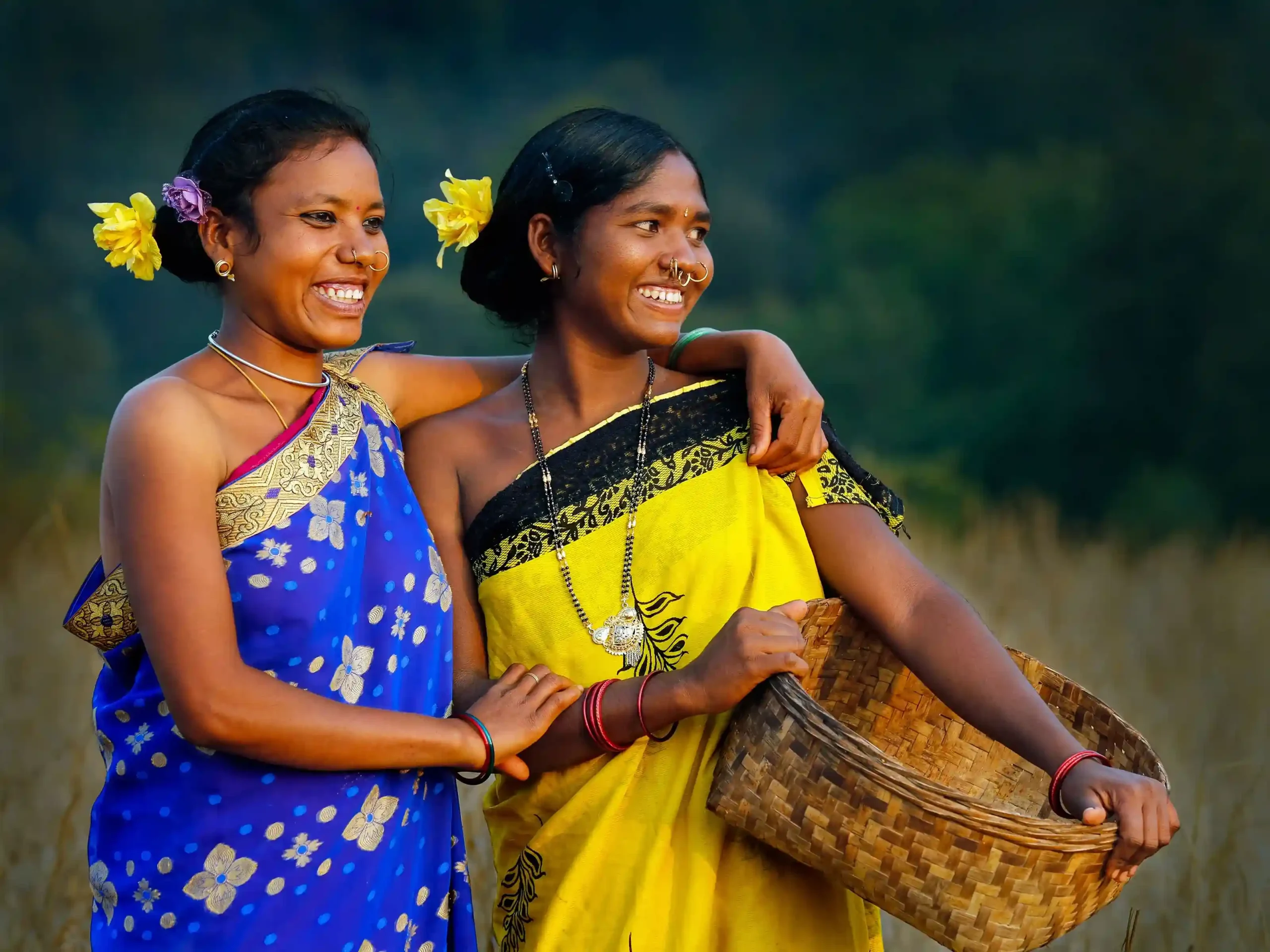
Jharkhand is home to many Indigenous communities, including the Santhal, Munda, Oraon and Ho, among others.
Depending on the route, photography may focus on local people, traditional clothing, village life, crafts, ceremonies and everyday activities — always with the necessary permissions and respect for the people you meet.
Chhattisgarh
Chhattisgarh offers remarkable opportunities to discover Indigenous cultures and rural life.
Depending on the route, encounters may include Gond, Baiga and Muria communities, as well as the devotional Ramnami community and other local people.
The Ramnami community is distinguished by a devotional tradition centred on the name of Rama. Some of its members have the sacred name “Ram” inscribed or tattooed on their bodies, and it also appears on the cloth they wear.
This tradition tells a powerful human, spiritual and cultural story, making it especially compelling for portrait and documentary photography.
The Bastar region is also fascinating for photographers, with its traditional villages, crafts and metalwork, markets, festivals and cultural traditions.
As with all our encounters with local communities, photography is approached with permission, respect and sensitivity, making it a genuine human exchange rather than simply a collection of images.
Odisha
Odisha is another remarkable destination for cultural and tribal photography.
Depending on the route and access, your journey may take you to regions associated with communities such as the Bonda, Gadaba and Kondh, including the Dongria Kondh.
The remote landscapes of southern Odisha, traditional markets, colourful clothing and jewellery, village life and crafts offer exceptional opportunities for documentary photography.
These journeys require careful planning, as many communities live in remote regions and deserve to be approached with respect, patience and sensitivity.
Nagaland — A Photographer’s Paradise
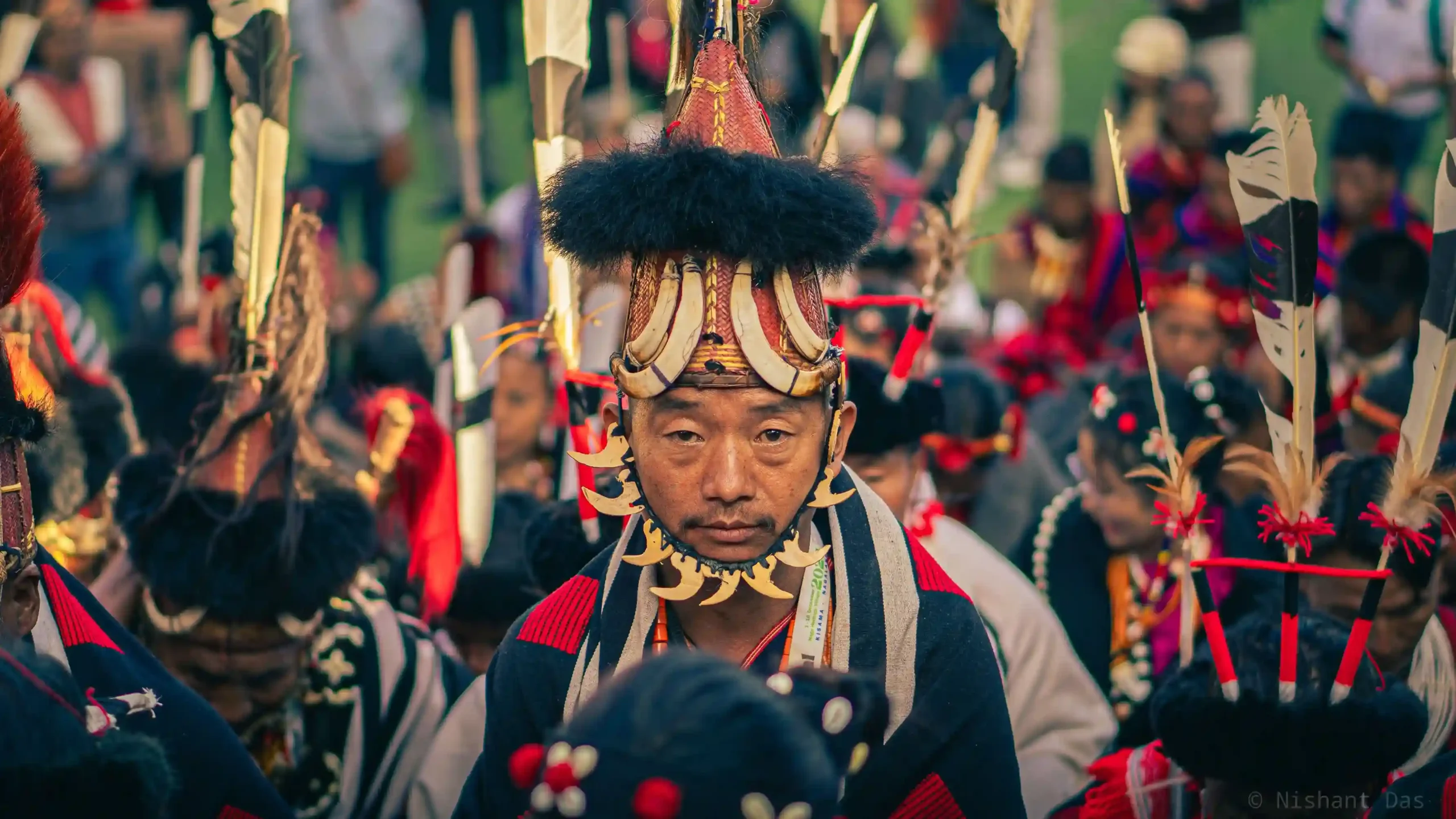
For those interested in the cultures of North-East India, Nagaland offers an extraordinary diversity of communities and traditions.
Depending on the route, we can discover the cultures of communities such as:
Konyak Angami Ao Sumi Lotha Chakhesang Rengma
Sangtam Phom Chang Yimkhiung Khiamniungan Pochury Zeliang
Each has its own traditions, clothing, architecture, crafts, festivals and visual identity.
The famous Hornbill Festival, generally held in December, can offer an exceptional opportunity to photograph representatives of different Naga communities gathered to share their traditional clothing, music, dances and cultural displays.
But some of the most powerful photographs are made far from the festivities.
In the villages.
Rajasthan — Faces That Tell Stories
And then there is Rajasthan.
For a portrait photographer, Rajasthan is a world of colour.
Traditional clothing. Turbans. Jewellery. Desert landscapes. Faces marked by time. Smiles. Lively markets. And all the extraordinary people you meet along the way.
Depending on the region and route, we can create opportunities to meet and photograph members of communities including the Rabari, Raika, Meena and Bhil.
A portrait of an older Rajasthani man wearing his traditional turban. A woman adorned with colourful jewellery. A camel herder returning from the desert. Children playing in a village street. An artisan working with their hands. A family preparing a meal.
These are more than photographs. They are moments from people’s lives.
Nepal, Bhutan and Sri Lanka — Different Faces, Different Stories
In Nepal, Himalayan villages, the Kathmandu Valley, monasteries, markets, artisans and major religious celebrations offer very different photographic worlds.
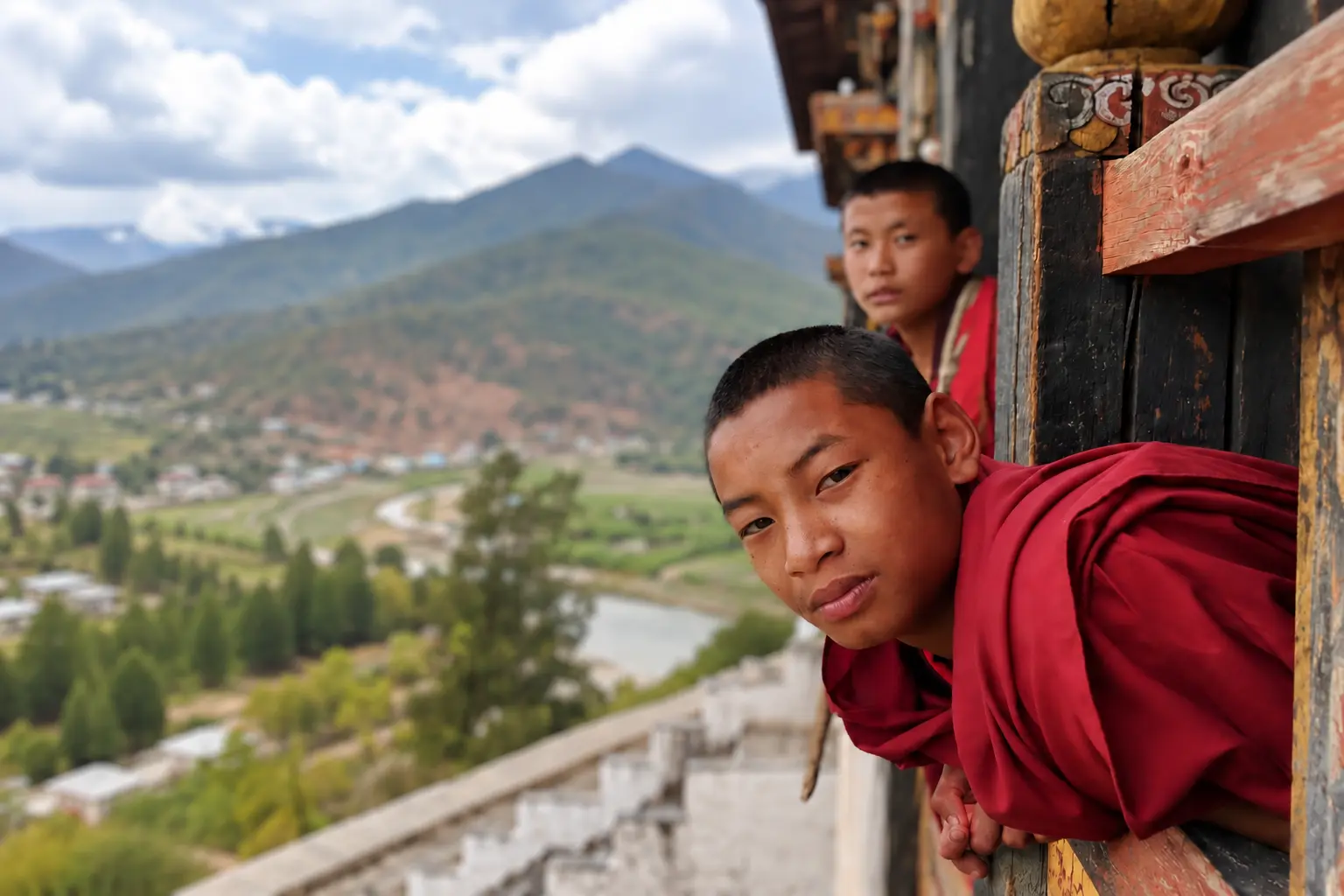
In Bhutan, traditional festivals, rural communities, monks, artisans and mountain villages reveal faces and traditions deeply connected to Himalayan culture.
In Sri Lanka, fishing villages, tea-growing regions, markets, crafts, religious ceremonies and everyday life in the countryside offer further opportunities for portrait and documentary photography.
In each destination, encounters depend on the local context, people’s consent and the opportunities genuinely available at the time of travel.
Pilgrims, Sadhus and Worshippers — Spiritual Faces of India and Nepal
Some of the best portrait photography opportunities are not found in remote villages, but along the great pilgrimage routes of India and Nepal.
These two countries are home to sacred cities, temples, monasteries, rivers and pilgrimage sites that draw millions of people in search of faith, spirituality and connection.
For a portrait photographer, these places create an extraordinary human landscape.
Imagine photographing:
A sadhu beside the Ganges A pilgrim resting after a long journey A worshipper preparing for a religious ceremony An older pilgrim who has travelled hundreds of kilometres A temple visitor wearing traditional clothing A monk crossing a monastery courtyard
A wandering ascetic sitting peacefully beside a sacred river A worshipper lighting a lamp during an evening ritual A family visiting a sacred temple A spiritual teacher surrounded by worshippers A pilgrim walking through the streets of an ancient religious city
Places such as Varanasi, Haridwar, Rishikesh and Pushkar offer wonderful opportunities for portrait and environmental photography.
In Nepal, the Kathmandu Valley, Pashupatinath and other major pilgrimage and spiritual sites offer a completely different photographic atmosphere.
The face is only the beginning of the story.
Clothing, setting, rituals, architecture, expressions and atmosphere all help tell it.
A sadhu sitting beside the Ganges is more than a photographic subject.
The river tells part of his story. The ash on his face tells another. The place around him tells another still.
And the moment you share with him may become the most memorable part of the photograph.
Sacred places naturally call for extra care. We encourage photographers to respect religious practices, personal space and local customs, and to ask permission where appropriate.
Photograph the person. Respect their faith. Discover their story.
Bring Your Portrait List
Birdwatchers often travel with a list of birds they hope to see and photograph.
Why shouldn’t portrait photographers have a list of their own?
You may already have certain portraits in mind.
Perhaps you would like to photograph:
A sadhu An older Rajasthani man wearing a traditional turban An artisan from a tribal community A member of a Naga community in traditional clothing A resident of a Himalayan village A monk A worshipper in a temple A pilgrim beside the Ganges A traditional fisher
A farmer A shepherd An artisan at work A woman wearing traditional jewellery A festival participant A traditional musician A dancer An older person in a village
Bring us your list.
Tell us about the people, communities, professions, traditions, cultures and types of portraits you would like to photograph.
With our local knowledge, we can plan your journey around your photography goals and identify the regions, communities, festivals, markets, pilgrimage sites and cultural experiences where these encounters may be possible.
Your list becomes our starting point.
Instead of travelling through a destination and relying entirely on chance, you set off with a clear photographic purpose.
You are not simply setting out to find portraits.
You arrive with a list — and we help you discover the stories behind it.
These encounters are never guaranteed. They depend on people’s consent, local conditions and the circumstances at the time of your journey.
The Faces of Holi
Few festivals bring together as much colour, emotion and energy as Holi.
Imagine faces covered in vibrant colours. Smiles. Laughter. Children chasing one another through the streets. Friends celebrating together. Traditional clothing dusted with colour.
Older people smiling as they watch younger generations celebrate.
And those moments when someone you met only five minutes ago suddenly invites you to join the celebration.
Holi is generally celebrated in February or March, according to the lunar calendar.
For a photographer, it can become a spectacular visual experience.
But the best photographs are about more than colour.
They are about emotion.
Candid Photography — Life as It Unfolds
We don’t want every photograph to look posed. Some of the most powerful portraits happen when people almost forget the camera is there.
A farmer working in a field. A fisher preparing nets. A woman making a meal. An artisan absorbed in a traditional craft. A trader opening a stall. Children playing together. An older man sitting quietly outside his home. A monk crossing a monastery courtyard. A family sharing a meal.
These everyday moments can become extraordinary photographs. That is why our itineraries leave time for observation and encounters instead of rushing from place to place.
Sometimes the best photograph comes simply from knowing how to wait.
A Portrait Is More Than a Face
A beautiful portrait does not need a studio.
The surroundings can tell part of the story too.
A farmer in a field. An artisan surrounded by tools. A fisher beside a boat. A monk in a monastery. A shepherd with their animals. A grandmother sitting outside her traditional home.
This is the beauty of environmental portraiture.
The face tells you something about the person. The setting opens a window into their world.
Build a Connection Before Taking the Photo
For us, the best portraits begin before you even take out your camera.
Say hello. Introduce yourself. Ask a question. Learn a few words in the local language. Listen. Smile.
And above all, ask permission before taking someone’s portrait.
Our local guides can introduce you to local people and communities, explain your approach as a photographer and help create a natural and respectful encounter.
When people understand why you would like to photograph them, the exchange feels much more natural.
And often… the smile becomes genuine.
Photographing Children and Families
Children can make some of the most spontaneous and moving portraits.
Their curiosity. Their laughter. Their games. Their expressions when they discover a camera.
But children deserve particular care and respect.
We encourage photographing them only with the appropriate permission from their parents or guardians, and we never treat children as photographic attractions.
The same principle applies to families and communities.
Respect comes before photography.
Photographing Festivals
A festival can turn an ordinary destination into an extraordinary photographic world.
Depending on the season and destination, we can plan photography tours around celebrations such as:
Holi — India
Generally in February or March.
Colour, emotion, movement and spontaneous encounters.
Diwali — India
Generally in October or November.
Lights, lamps, family gatherings, markets and decorated homes.
Hornbill Festival — Nagaland, India
Generally in December.
Traditional Naga clothing, music, dancing and cultural gatherings.
Hemis Festival — Ladakh, India
Generally in June or July.
Masked dances, monks, traditional costumes and the spectacular Himalayan setting of Hemis Monastery.
Festivals in Nepal, Bhutan and Sri Lanka can also be included in photography tours, depending on the calendar.
The exact dates of many festivals change each year. We therefore plan the journey around the relevant festival calendar.
Photograph Without Rushing
Photography takes time.
That’s why our portrait photography tours aren’t built around a packed schedule of ten different places in one day.
We prefer to give you time to stop, observe, meet people and wait.
Perhaps you’ll spend an hour in a village instead of twenty minutes. Maybe you’ll return to the same market at a different time of day. Or perhaps you’ll simply wait for the right light.
You might stay with a family and talk before taking your first photograph.
The aim isn’t to come home with hundreds of images.
The aim is to come home with photographs that truly mean something.
For Professional Photographers and Passionate Amateurs
You don’t need to be a professional photographer to join one of our photography tours.
You may be an experienced portrait photographer, a documentary photographer, a street photography enthusiast or simply someone who loves photographing people and wants to improve.
We can adapt the journey to your interests and experience.
You can bring professional equipment, a mirrorless camera, a DSLR or a lighter setup.
Equipment matters. Human connection matters more.
Our Local Knowledge
This is where our experience makes a difference.
Finding people to photograph isn’t the hardest part.
Identifying the right encounters, communities, place and moment — while approaching people respectfully — takes genuine local knowledge.
Our local relationships and experience help us find opportunities that may never appear in a conventional travel brochure.
We can arrange village visits, cultural encounters, guidance from local experts, experiences with communities, festival photography and access to places where a photographer can take time to observe instead of simply passing through.
And sometimes, we can arrange something you never imagined possible.
Some of our most special photography experiences are reserved exclusively for our clients.
Photograph with Respect
People are not tourist attractions. They are human beings.
We encourage every photographer to approach people with respect, dignity and curiosity.
We don’t encourage intrusive photography, unwanted close-ups or entering private spaces without permission.
When permission from a community, family or individual is needed, asking is an integral part of the experience.
Our aim is to create photographs that celebrate people and their cultures — never images that exploit them.
Photograph the face. Discover the person. Understand their story.
Your Camera | Our Local Knowledge | A World of Stories.
From the tribal and Indigenous communities of Jharkhand, Chhattisgarh and Odisha to the colourful cultures of Nagaland and Rajasthan, from pilgrims and sadhus in India’s sacred cities to Himalayan villages in Nepal and Bhutan, and from traditional festivals to Sri Lanka’s rural and coastal communities, we can create a photography journey centred on people, cultures and their stories.
Bring your camera. Your curiosity. Your patience. And your portrait list.
We’ll take care of local contacts, logistics and opportunities to meet people.
Don’t come home with photographs alone. Come home with stories.
Tell us which people, cultures, communities, festivals, pilgrimage experiences or types of portraits you dream of photographing — and we’ll plan the journey around your vision.
You bring the list. We’ll help you discover the stories behind the faces.